

Een “deep dive” in the koffies die de Branie en Mokum blends maken
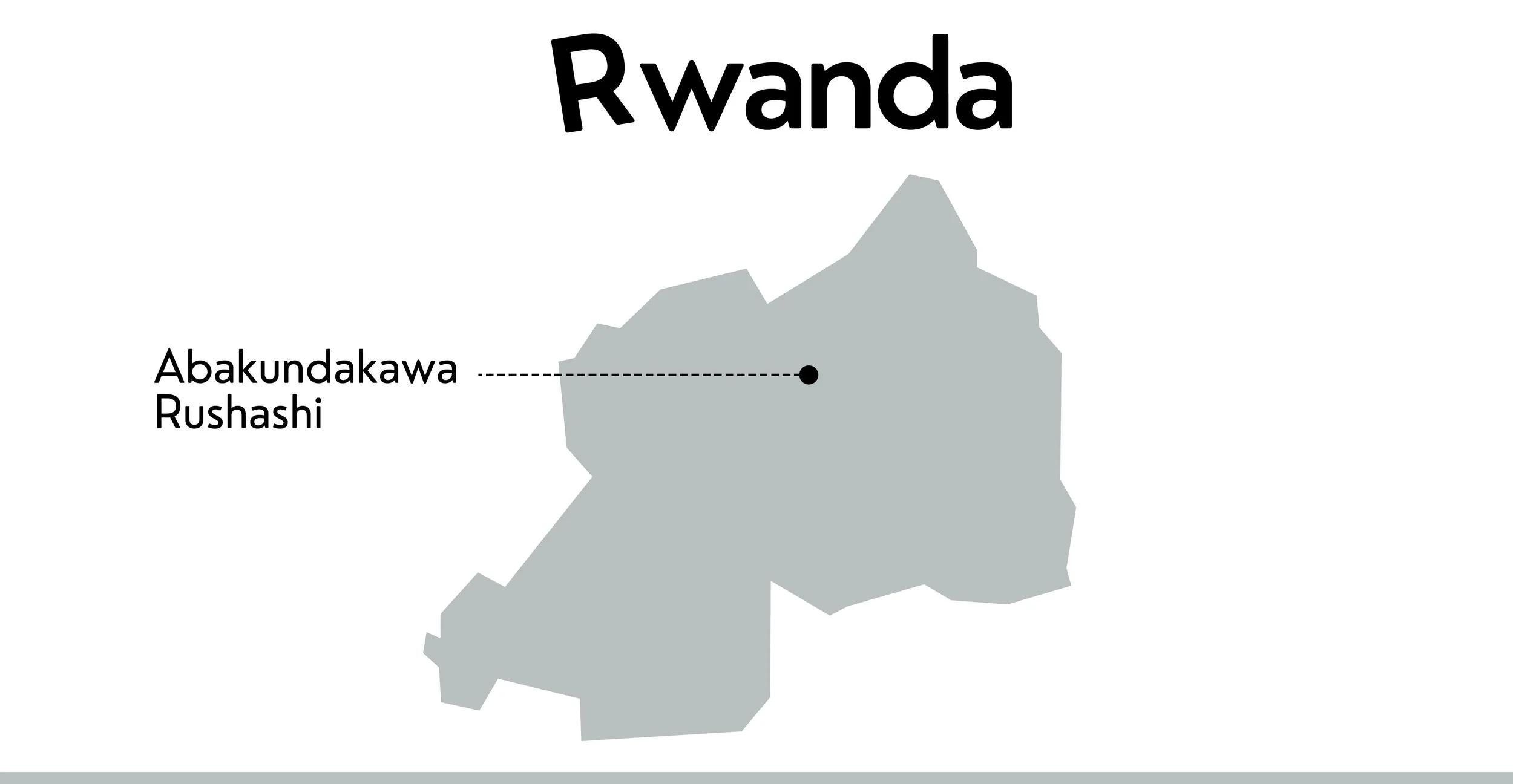
In de afgelopen jaren is de coöperatie Abakundakawa aanzienlijk gegroeid. Ze trekken steeds meer boeren aan die specialty coffee willen produceren en hebben met zorg een spaar- en kredietsysteem ontwikkeld dat economische zekerheid biedt aan hun leden. Waar de coöperatie in 1999 begon met 103 leden, bestaat deze vandaag de dag uit 2.109 boeren, van wie 919 vrouwen en 477 jongeren.
In zeventien dorpen in het district Gakenke hebben zij de oprichting van twee vrouwengroepen gesteund: Duhingekawa en Abanyameraka. Daarnaast is de Ishema Youth Coffee Group ontstaan, die voor het merendeel uit vrouwen bestaat (289 van de 477 jonge boeren). Dit initiatief kwam voort uit de boeren van Rutabo zelf.
De keuze: Het leger, de stad of de koffie. In Rwanda is 80% van de boeren op leeftijd, de werkloosheid is hoog (24%) en het risico dat jongeren zich bij bendes aansluiten is aanzienlijk. "De opties voor jongeren zijn beperkt," deelt Antoine, onze lokale partner. "Een jonge man kan zijn ouders helpen op het land, naar de stad trekken of in het leger gaan. Een jonge vrouw kan trouwen, naar de stad verhuizen (waar ze vaak in de prostitutie belandt) of naaister of kapper worden."
Meer dan 13 jaar stabiliteit. Sinds 2013 hebben wij ons gericht op het creëren van stabiliteit binnen deze complexe werkelijkheid. We kopen consequent in bij Rushashi, waarbij we jaarlijkse volumes van ongeveer 34.000 kg aanhouden (zo’n 1,5 container). Inmiddels hebben we een markt opgebouwd waarin minstens dertig branders elk jaar terugkeren voor deze Rwandese koffie. Experimentele partijen maken nu zo'n 10% van ons volume uit en dit aandeel blijft groeien. Parallel hieraan hebben we, samen met SPVO - een subsidieproject van de Nederlandse overheid - stappen gezet om regeneratieve landbouw verder uit te breiden via een demonstratieplot.
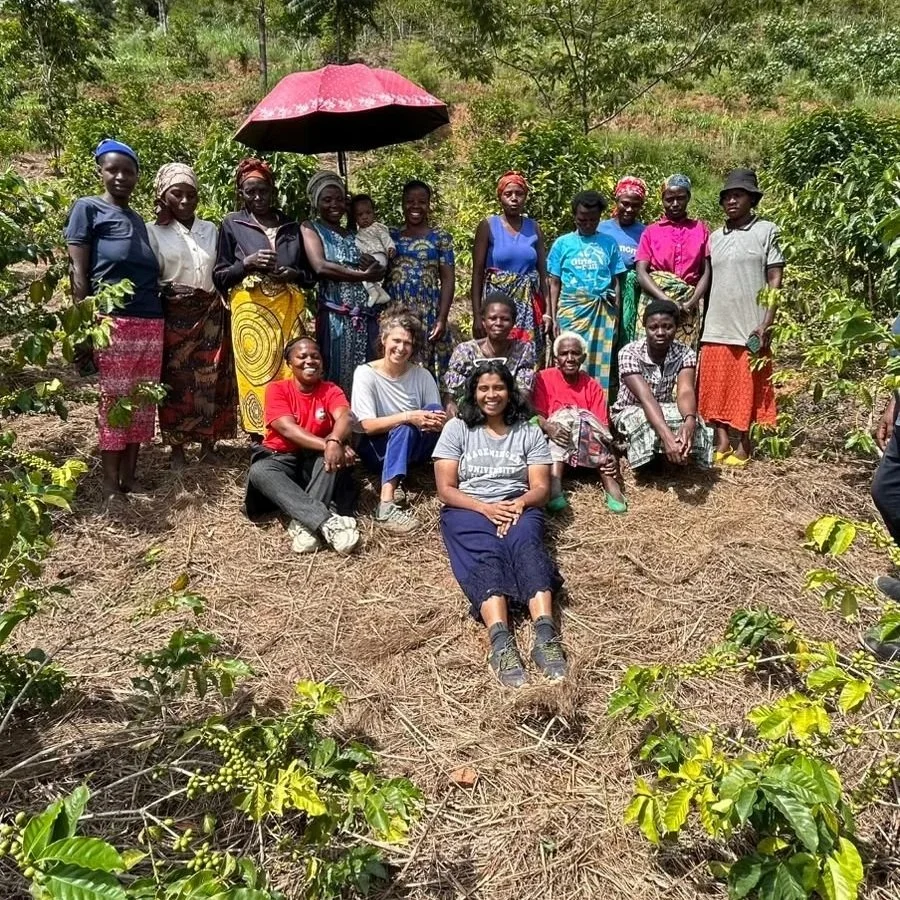
Leden van de Hingakawa Women’s groep samen met het TSU team
2025 samenvatting
Wat ging er goed?
In 2025 kwam het SPVO-project bij Abakundakawa volledig tot bloei. De langetermijncontracten van de gemeente Amsterdam boden de coöperatie de nodige stabiliteit en het vertrouwen om ruimte te creëren voor initiatieven die verder gaan dan handel alleen. Er is een demonstratieveld van 3 hectare aangewezen waar boeren als “rentmeesters van het land” kunnen optreden via regeneratieve landbouw technieken en zo geïnspireerd raken dit op hun eigen land zelf ook toe te passen. Op deze manier wordt er echt schaal bereikt, boeren zijn immers zelf eigenaar van hun eigen land, en iedere verandering moet uit hun eigen wil en draagkracht komen. De locatie van het demonstratieplot is uitgekozen zodat veel boeren hier gemakkelijk heen kunnen komen.
Innovatie in het veld. Met steun uit het SPVO-budget plant de coöperatie inheemse schaduwbomen aan en worden veldmedewerkers uitgerust met tablets. Hiermee kunnen zij nauwkeurige en actuele data verzamelen bij alle aangesloten boeren. Het demonstratieveld zelf telt inmiddels zo’n 3.000 koffiebomen, waarvan de oogst voor het komende seizoen voor de deur staat.
Meer dan alleen koffie. Dit project gaat verder dan het produceren van koffie; het helpt de inkomens en het levensonderhoud van alle boeren te verbeteren, zodat zij actief en betrokken blijven bij de coöperatie. Dankzij de langetermijncontracten, gerichte ondersteuning en toegang tot moderne hulpmiddelen zijn de boeren niet langer slechts deelnemers. Zij geven de toekomst van hun land en hun onderneming zelf vorm, en zij zijn degenen die daar direct van profiteren.
Wat ging er niet goed?
Het wordt steeds moeilijker om de context in Rwanda te beschrijven zonder deze in rigide modellen te dwingen. In het afgelopen jaar hebben verschillende onderzoeksgroepen — waaronder True Price, onze eigen SPVO-nulmetingen en 60 Decibels — geprobeerd het levensonderhoud van de boeren te kwantificeren. Uit al deze onderzoeken komt één ding duidelijk naar voren: de meeste boeren zijn nog ver verwijderd van een “leefbaar inkomen”, ook al lopen de definities hiervan ver uiteen. We begrijpen zowel de omvang van de uitdaging als de potentie die erin schuilt, en dit is precies de reden waar we hier blijven werken.
Structurele barrières. De structurele realiteit is lastig te negeren. De landoppervlaktes zijn extreem klein, vaak minder dan 0,1 hectare, en er zijn nauwelijks alternatieve inkomstenbronnen. Dit legt een enorme druk op koffie als een van de weinige manieren om geld te genereren.
De ruis van de benchmarks. Tegelijkertijd wordt het moeilijker om dit over te brengen aan klanten in Europa. Het gesprek wordt vaak gedomineerd door modellen en benchmarks die een complexe werkelijkheid versimpelen. In die ruis gaat de stem, de nuance and the realiteit de producenten vaak verloren.
Kiezen voor de lange termijn. In deze context focussen onze partners bij de bron zich op specialty coffee als een manier om het inkomen te versnellen. Als schaalgrootte beperkt is, moet de waarde per kilogram omhoog. Het is geen kant-en-klare oplossing, maar een poging om dichter bij een levensvatbaar model te komen. Onze keuze om hier te blijven werken is een bewuste: het betekent dat we ons committeren aan langetermijnrelaties en stabiele markten, ook als de resultaten niet direct zichtbaar zijn. Vertrekken zou immers alleen maar leiden tot nog minder opties voor de boeren.