CHANGE BEGINS AT HOME
Amsterdam. It’s where This Side Up originated, where the whole team met each other, where we cup our coffees - in short, it’s our hometown.
When the municipality of Amsterdam put out a tender for their coffee supply, we simply had to participate. Across 179 buildings throughout the city, it’s where where all local government officials drink their coffee, where we pick up our passports, read books at the library, register our babies and marriages…
Amsterdam put out an ambitious tender. The city council and even the mayor got involved. The bar was high: they wanted to pay the real price that coffee costs. No labels, but traceability. No window dressing, but real impact. They wanted local entrepreneurs from within the city - and last but not least: not cheap, but good. Good for people and planet.
It’s not often we’re challenged in our sustainability claims. It’s not often we have to show our real selves in a truer way than we ever have, to really showcase what we stand for and who we are. But this is what Amsterdam does to you. It's bold, brings out discussions, and wants you to show yourself in your true colours. And change always begins at home!
In the official tender documents we read:
The ingredients for coffee meet at least the minimum standards listed below. Compliance with this can be demonstrated, among other things, by providing certification for a quality mark, or by substantiating that the products and services meet the requirements.
Coverage of costs for socially and environmentally friendly production – Products are purchased from producer organizations at least at a fixed minimum price (guaranteed price covering costs for socially and environmentally friendly production). If the world market price exceeds the minimum price (guaranteed price), the world market price is paid to the producer organization;
Investing in development – Producer organizations receive an additional fixed and non-negotiable premium, enabling them to invest in further development and deciding for themselves how it is spent;
Pre-financing – If desired, the producer organizations can receive a percentage of the sales price of their product prior to shipment, allowing them to make necessary investments.
The Municipality of Amsterdam attaches great value to a sustainable and fair product. Therefore, award criterion 2 explicitly requests an ambitious plan of action. As a minimum requirement, we demand a number of standards.
We don’t like the standard impact methodologies and certifications. Not because we like to simply rebel. It’s because it’s top-down, and the goals are often decided far away. As This Side Up, we don’t want to dictate from Amsterdam what a farmer in Brazil, Indonesia or Rwanda should be doing. It’s their farm, their life. If we want to offer help, we should do it together.
We understand, however, the anxiety that comes with moving away from benchmarks like Fairtrade or Living Income references. These frameworks often act as substitutes for trust when relationships lack depth. For someone in Amsterdam, it’s not easy to know a farmer in Rwanda—and vice versa. Benchmarks offer reassurance.
Instead of trying to model every reality, we embrace the complexity of coffee. Each context is treated as unique, receiving the time, attention, and care it deserves. Sometimes we can help solve problems; other times, we stand alongside as they are worked through.
At the same time, we recognise a practical truth: as an importing company, our work must remain comparable within the industry. Buyers need reference points. Rather than relying solely on external benchmarks, we open up our work. We show how prices are built, how decisions are made, and the realities behind them. We make relationships, trade-offs, and uncertainties visible. This allows for a different kind of comparison—one rooted in context, consistency, and integrity over time. This report serves as the documentation of exactly this.

As This Side Up, we work for systematic change. But in order to change, we have to first recognize where we are: and that a capitalistic system with strong colonial remnants. Cheap commodities are king, and keeping both consumer and farmer “in the dark” about prices, is normal habit. Power is distributed away from the producer, and the market segment of “ethical products” remains limited. We work in a simple, though effective way: We treat coffee farmers as equal entrepreneurs, and ask in open conversations about their needs. We use quality as the differentiating factor, acknowledging that a higher quality pays a higher price and leads to farmer independence. We do this all “in the open” and showcase what the quality is, and what the needs are of both ends of the value chain, farmers and coffee consumers alike. We try to make the best match of coffee farmer and coffee drinker: because that is true sustainability, year after year after year. Together we are the value chain.

We are not the first with good intentions to come to coffee farmers, and most farmers have also been betrayed by initiatives disguised as “good”, but that were detrimental in effect. It’s important to recognize that there is an inherent skepticism from a coffee farmer to a coffee buyer. Trust is something that needs to be built, year after year. An important metric therefore is how many years we’ve been working with our partners. It shows that we are there as partners, shoulder to shoulder. We want to listen to their realities, and they to ours.
Read More
Producing high-quality coffee requires effort, and that effort justifies a higher price. It gives farmers the space to become more autonomous and entrepreneurial, rather than being stuck in a commodity market where both they and their coffee are easily replaceable. This Side Up works with farmers from different economic backgrounds around the world. Buying specialty coffee of different qualities from all of them changes their world in different ways. Those in acute poverty can earn better income and those who are passionate can land a stable home for their coffees. For producers at origin, specialty coffee acts as a catalyst for economic growth.
Read More
This Side Up works with different market segments in Europe: Entry Level (those seeking affordable, good-quality coffee), Mid Tier (mostly 84–86 scoring coffees), and High End (competitive and nanolots). Despite these differences, most share a common goal: to grow their business and build long-term commitments based on quality, price, and story. Being a responsible middleman means facilitating direct trade matching producers and their coffee with the right roasters.
Read More
From the tender documents: single-use plastic products, such as packaging materials for the delivery of parts, are excluded, unless it can be demonstrated that no alternatives are available. Packaging material consists of reusable material as much as possible (e.g., coffee bean buckets). Other packaging material is 100% recyclable, unless it can be demonstrated that no alternatives are available. By 2030, all packaging materials and cardboard boxes must be fully circular, unless it can be demonstrated that this is not technically feasible. This means that the packaging materials do not contain primary abiotic raw materials. Bio-based, secondary, or renewable raw materials are considered circular.
Working with BYBO at the GEMBO site in Amsterdam North has really shown why they’re such a strong partner. Their high-tech IMF roaster makes consistent, high-quality coffee while using less energy and producing lower CO₂ emissions, and the automated profiling system keeps every batch on point. On top of that, their intentional approach—95% of shipments in circular containers and electric transport for distribution—makes operations smoother and more sustainable. It’s clear that a skilled, thoughtful roaster like BYBO doesn’t just deliver great coffee—they also make scaling and tracking everything much easier.
Context is king. The needs of a community are everywhere different. Being it from city center Amsterdam to the edges of the Bijlmer, imagine the different needs of a Brazilian farmer compared to a Rwandan or Indonesian one. We therefore measure “impact” on the scale of their own ambitions. We use as “point 0” when we started, and measure it on an annual basis. How did we help them getting closer to their goals?

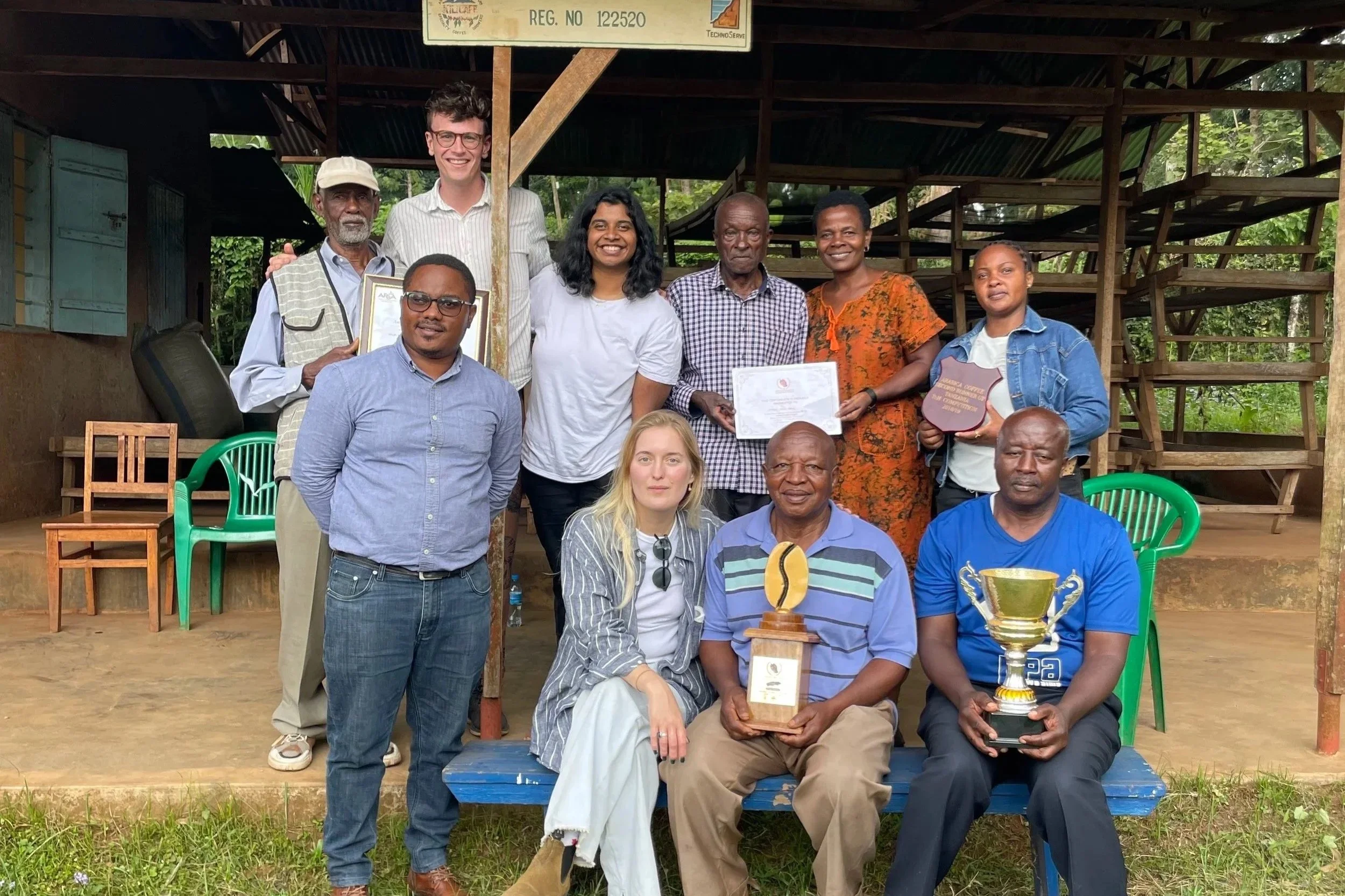
Partner: Wanza
XX smallholder farmers from 4 groups
(Amkeni, Masista, Marangu and Aranga)
33 bags consumed by Mokum Blend
10% of blend together with Rushashi, Brazil for Mokum
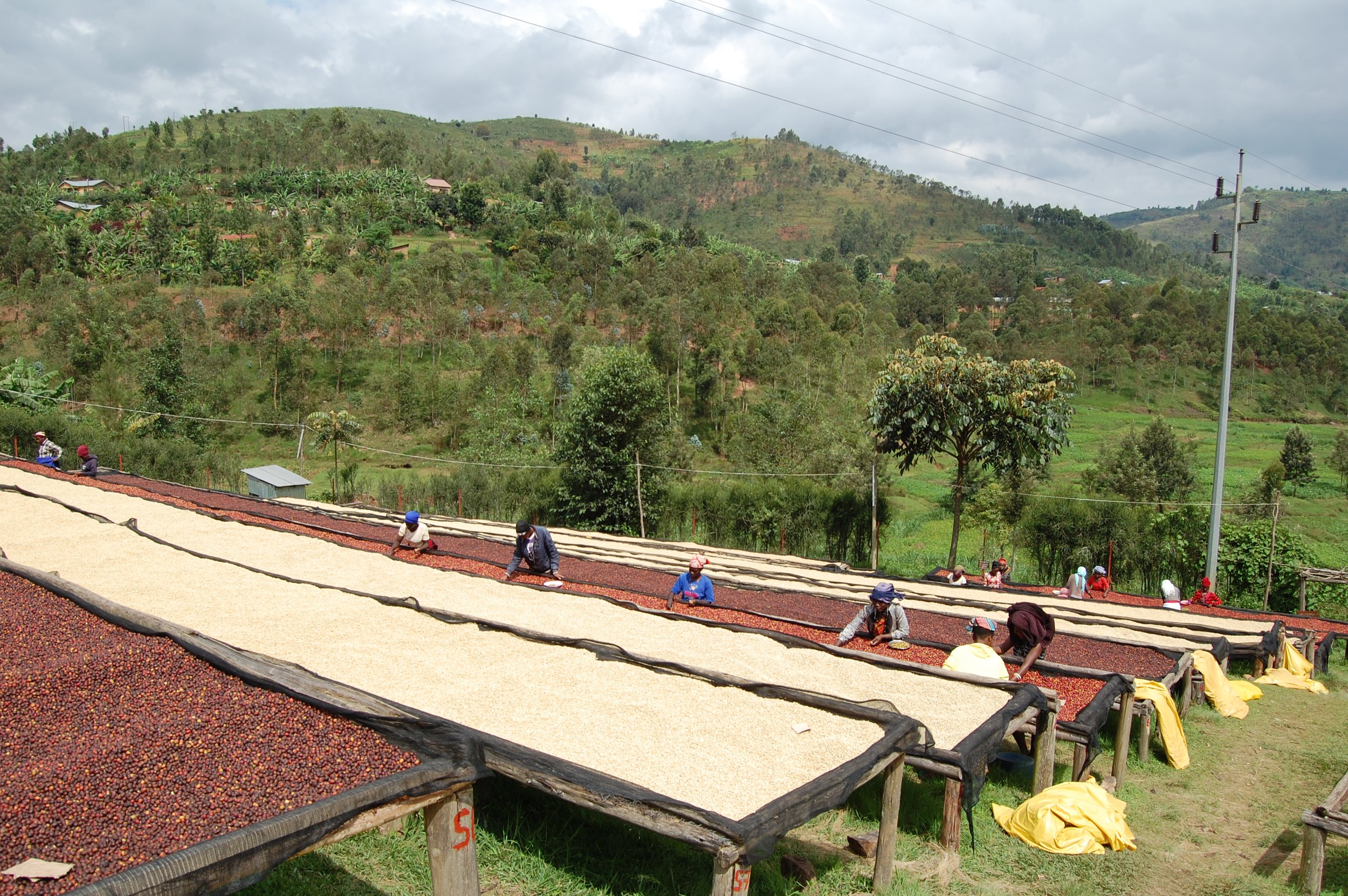

Partner: Abakundakawa Rushashi
2109 farmers
248 bags consumed by Amsterdam including Mokum & Braine *
40% for Mokum and 30% for Braine

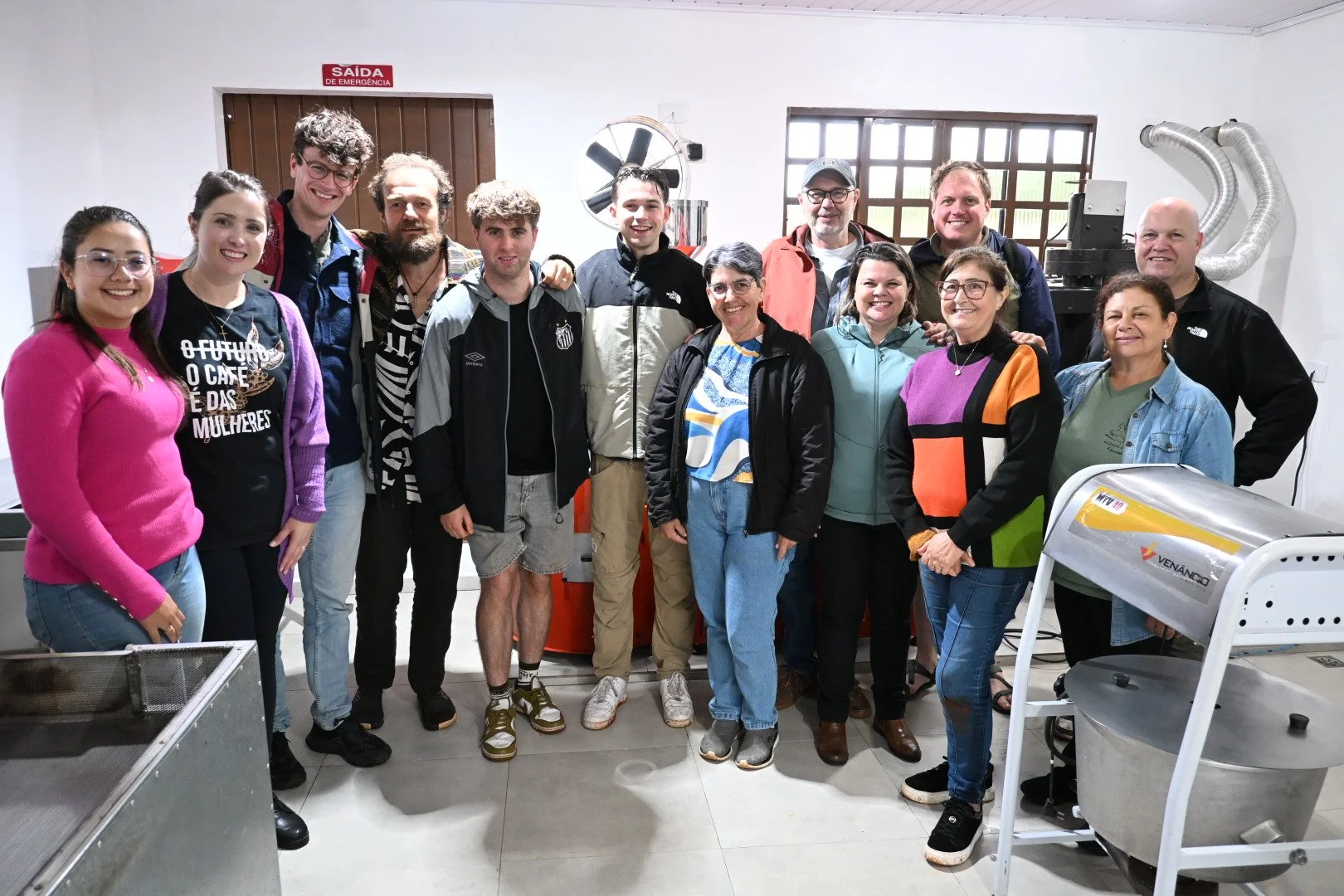

Partner: Capricornio
14 farmers, 270 workers
308 bags consumed by Mokum and Braine*
50% for Mokum and 30% for Braine