

Een “deep dive” in the koffies die de Branie en Mokum blends maken

In Indonesië werken we inmiddels nauw samen met drie verschillende coöperaties: Kojoyo, First Light Coffee (beiden op Java) en ASNIKOM (op Flores). Samen met onze exportpartner Ontosoroh gebruiken zij specialty coffee als een middel voor economische verandering, sociale rehabilitatie en klimaatadaptatie.
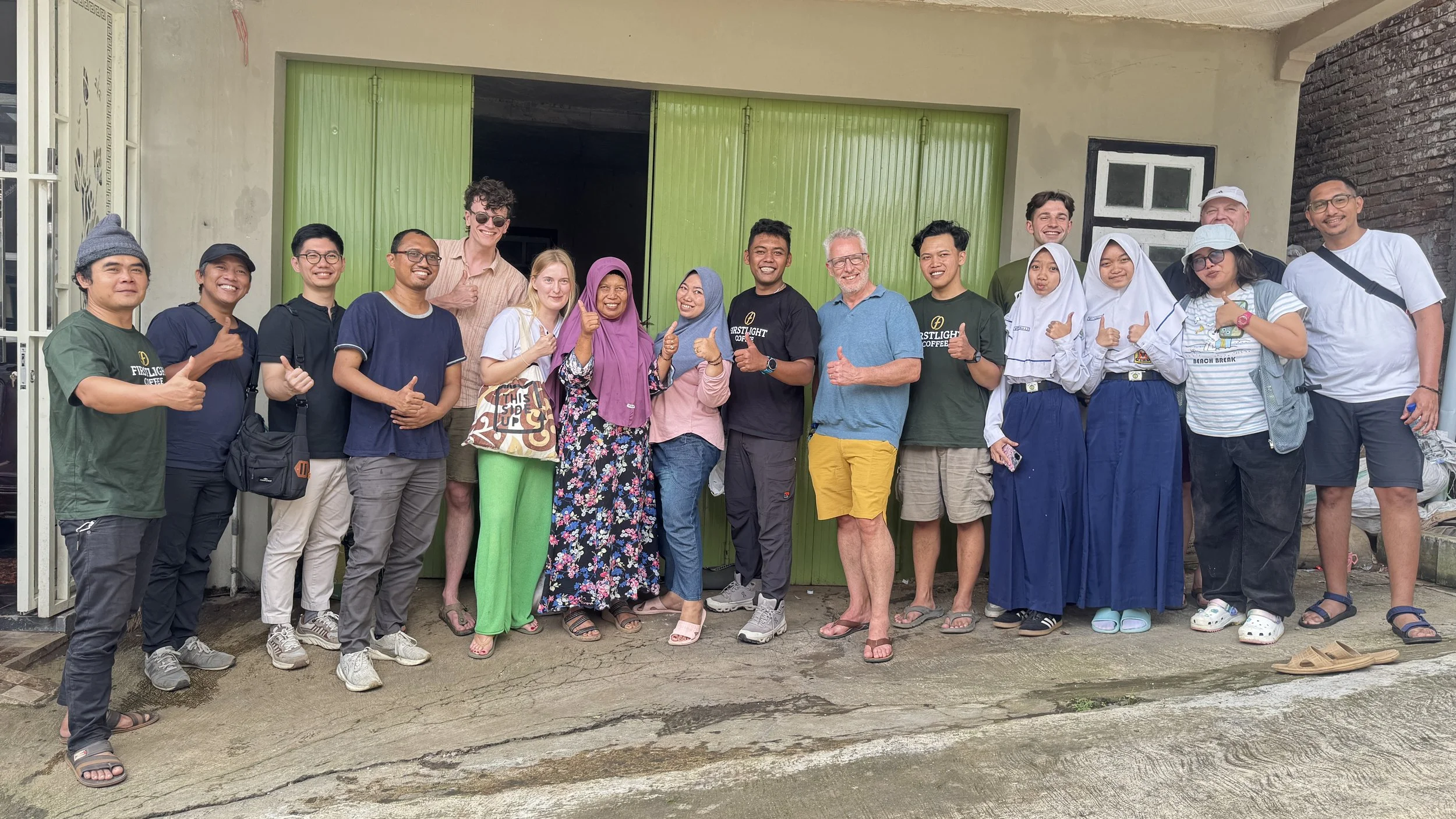
Midden-Java: Van tabak naar duurzaamheid. In de regio Temanggung werken de naburige coöperaties Kojoyo en First Light Coffee aan een fundamentele transitie. Kojoyo, in 2019 opgericht door Wahyu Setiono, helpt kleine boeren de overstap te maken van milieubelastende gewassen zoals tabak naar een duurzamere koffieteelt. Naast ecologisch herstel creëert de coöperatie kansen voor jongeren en biedt het een bijzonder rehabilitatietraject voor voormalig (religieus) geradicaliseerde individuen via landbouw en koffietoerisme. Via partnerschappen met groepen zoals de First Light-producenten, onder leiding van Cahyo Pertama, wordt er volop geïnnoveerd op het gebied van bodemgezondheid en biologische meststoffen.
Flores: "All that glitters is Robusta". Op het eiland Flores ligt de focus op een uniek project dat enkele jaren geleden begon tussen ASNIKOM en This Side Up: de ontwikkeling van Specialty Robusta. ASNIKOM verwerkt deze bonen volgens de strengste specialty-standaarden, wat heeft geleid tot een uniek product in de markt.
Dit project markeerde ook de geboorte van onze exportpartner Ontosoroh. Oorspronkelijk hielp Adri (Ontosoroh) de coöperatie ASNIKOM enkel met vertalingen en onderhandelingen omdat de taalbarrière directe export bemoeilijkte. Toen Lennart (This Side Up) de eerste monsters ontving — waarbij de Robusta aanvankelijk als "bonus" was toegevoegd om de container te vullen — was hij direct verkocht: dit was een van de beste Aziatische Robusta’s die hij ooit had geproefd. Op verzoek van This Side Up begon Adri zelf de export te faciliteren, wat leidde tot een krachtig drieluik tussen boer, exporteur en importeur.
Impact voor de gemeente Voor de gemeente Amsterdam betekent het voortzetten van deze inkooprelatie directe steun aan deze drie coöperaties. Dankzij de langetermijncontracten van de gemeente kan Ontosoroh duurzame ondersteuning bieden die zich vertaalt in tastbare economische impact op de werkvloer. Deze stabiliteit creëert de broodnodige ruimte voor innovatie, procesverbetering en een bestendig inkomen voor de boeren op Java en Flores.
2025 samenvatting
Wat ging er goed?
ASNIKOM Youth Group: Training in kwaliteitscontrole. In 2025 heeft Ontosoroh de ondersteuning aan de ASNIKOM Youth Group voortgezet om de kwaliteitscontrole van de Robusta te versterken. Deze jongeren kregen praktijkgerichte training in het identificeren van fysieke defecten, vochtmeting, bewustwording van wateractiviteit en gestructureerd cuppen (proeven). Ontosoroh is van plan deze ondersteuning in 2026 uit te breiden met geavanceerde trainingen in cupping, fermentatie- en droogtechnieken, en het regelmatig monitoren van de kwaliteit.
First Light Coffee (Java, Candiroto): Uitbreiding en Excelsa. Waar de activiteiten vorig jaar nog beperkt waren, heeft Ontosoroh in 2025 de samenwerking met Cahyo aanzienlijk uitgebreid. Er is een nieuw droogstation en een micromill geopend om grotere volumes Robusta te verwerken en experimenten te vergemakkelijken. Daarnaast ondersteunt Ontosoroh de start van de verwerking van Specialty Excelsa, een ander koffieras naast robusta en arabica dat andere eigenschappen op gebied van klimaat en smaak met zich meebrengt. Deze initiatieven bieden volop kansen voor de ontwikkeling van technische vaardigheden, proces-experimenten en het verkennen van nieuwe manieren om waarde toe te voegen aan de koffieboerderijen.
Wat ging er niet goed?
Consistentie en logistieke uitdagingen. Er is een verschil tussen de kwaliteit per kilogram en de algehele kwaliteit, uitgedrukt in consistentie. Wanneer je 200 balen uit een specifieke kwaliteitsklasse bestelt, mag je verwachten dat elke baal identiek is en dat een monster representatief is voor de hele partij. Bij de koffies van ASNIKOM was dit helaas niet het geval.
Dit betekende dat exporteur Ontosoroh op Java grote hoeveelheden koffie opnieuw moest sorteren of zelfs afkeuren. Dit bracht een enorme hoeveelheid extra werk en tijd met zich mee, waardoor de verschepingen aanzienlijke vertraging opliepen.
Een van de belangrijkste oorzaken was een gebrek aan tijdige communicatie rondom de inkoopstrategie. De Robustamarkt vertoonde in 2025 hevige schommelingen. De coöperatie biedt boeren dagprijzen voor de koffiebessen, terwijl wij als This Side Up het gemiddelde van deze dagprijzen over het hele seizoen betalen. Het bleek dat de coöperatie iets te lang wachtte in de hoop dat de prijzen zouden dalen, zonder hierover contact op te nemen met de exporteur. Dit leidde tot een enorme tijdsdruk op de verwerkingsfaciliteiten, wat uiteindelijk de consistentie van de kwaliteit in gevaar bracht.