The Challenge
Coffee farming remains an important source of livelihood for communities in Northern Rwanda, yet persistent inequality and poverty within the coffee value chain mean that producing high-quality specialty coffee does not necessarily translate into sustainable livelihoods for farming families. Abakundakawa Cooperative produces specialty coffee of high quality, but small landholdings and limited production volumes constrain farmers' ability to generate sufficient income from coffee alone.
As a result, many farming households struggle to cover essential costs, including education and healthcare. Financial pressure and the inability to consistently pay school-related expenses are among the factors contributing to the prevalence of child labour. At the same time, access to basic healthcare and social infrastructure remains limited, particularly for women and young mothers, who often carry a disproportionate share of unpaid care responsibilities.These challenges demonstrate that improving coffee prices alone is not sufficient to address the structural causes of poverty and inequality. There is a need for complementary interventions that strengthen household resilience, improve access to essential services, and create opportunities for farmers—particularly women—to diversify and increase their incomes.

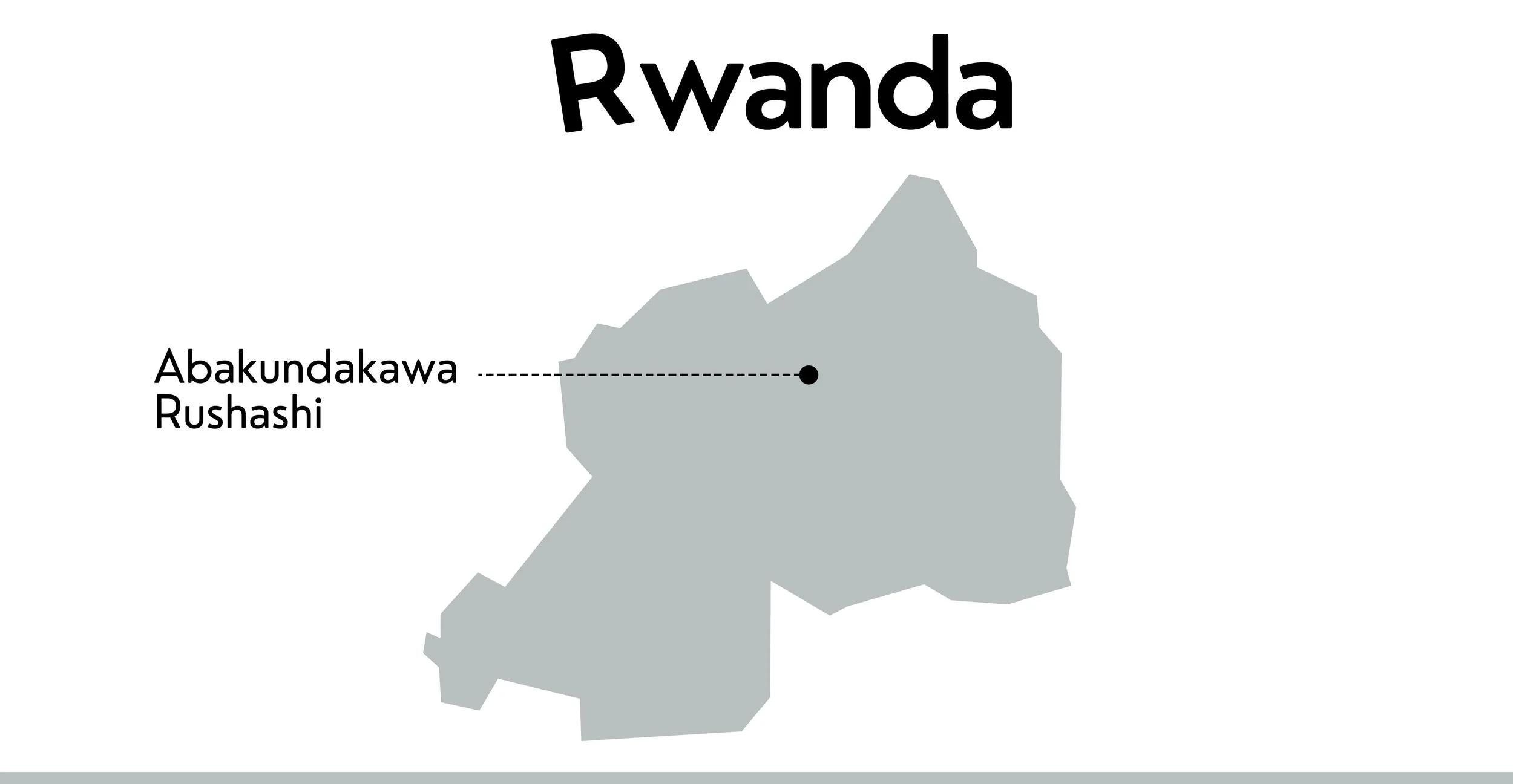
Abakundakawa Rushashi, Gakenke District - Northern Province, Rwanda

Strengthening regenerative agricultural practices, improving access to and quality of education, supporting childcare and basic healthcare services, raising awareness around child labour and education, and identifying additional income-generating opportunities that can contribute to more resilient and sustainable livelihoods.

Abakundakawa Rushashi (coop), This Side Up (funder), RVO Nederland (funder), World Vision (NGO), Ruben Borge (Expert), Eight World (Research consultant)



Goal 1: Establish a comprehensive understanding of the social, economic, environmental and human rights challenges, risks and opportunities affecting coffee farming households and the wider cooperative community.
Goal 2: Conduct targeted assessments, including baseline studies, gender analysis, environmental and carbon assessments, and human rights and environmental due diligence, to establish measurable indicators and identify priority areas for intervention.
Goal 3: Translate the findings of the assessments into an evidence-based and locally relevant intervention strategy, ensuring that Phase B activities directly respond to verified challenges, gaps and opportunities.

Goal 4: Improve the well-being, working conditions and social inclusion of coffee farming households, with particular attention to women, children and youth.
Goal 5: Strengthen the productivity, environmental resilience and long-term sustainability of smallholder coffee farming systems through regenerative agricultural practices and income diversification.
Goal 6: Increase the value retained by farmers by strengthening cooperative capacity, market access, quality development and participation in higher-value segments of the coffee value chain.
Goal 7: Advance women's economic empowerment by reducing barriers to economic participation and supporting diversified livelihood opportunities, vocational skills and financial inclusion.
Goal 8: Strengthen responsible business practices, transparency and traceability across the coffee value chain, enabling the identification, prevention and mitigation of social and environmental risks.



Every activity under Phase B responds directly to a challenge, gap or opportunity identified through the Phase A baseline, local impact assessment and due diligence processes.
-
Establish a childcare facility
Create rest and shade areas for farmers
Set up an ICT and skills space for youth
Provide protective equipment and first aid kits
Pillar 1: Improving Well-being, Working Conditions and Social Infrastructure
Strengthening cooperative infrastructure and services to improve the well-being, safety and participation of women, children and youth.
-
Establish a women-managed agroforestry plot
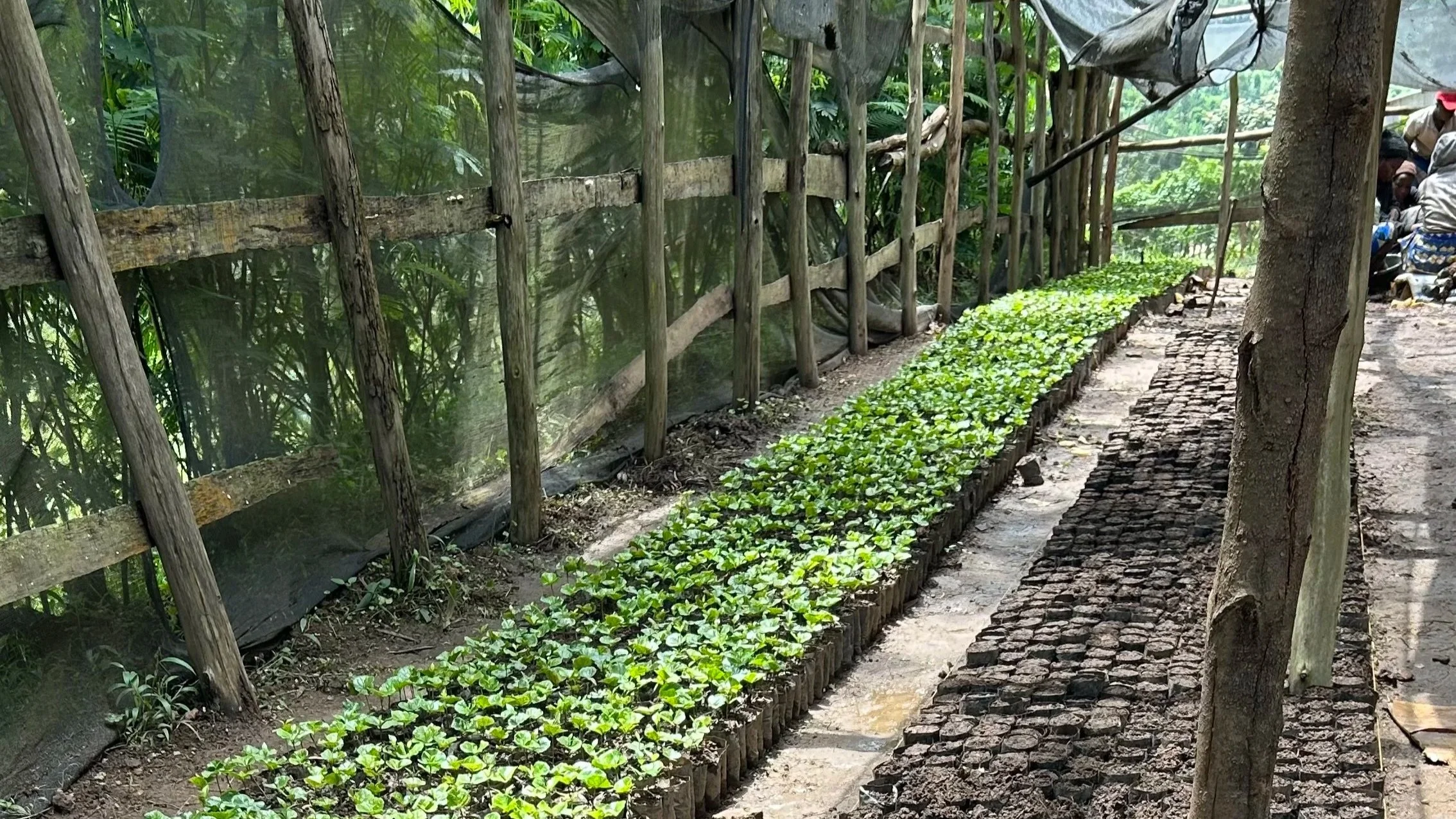
Produce and distribute shade trees, fruit trees, mulch seedlings and cover crops
Implement a livestock scheme
Deliver training on agroforestry, soil health, composting and sustainable farm inputs
Pillar 2: Scaling Regenerative Agriculture and Farm Resilience
Strengthening smallholder farming systems through regenerative practices that improve soil health, biodiversity, productivity, climate resilience and income diversification.
-
Facilitate participation in international coffee trade shows
Strengthen the cooperative's website and social media presence
Launch a field barista initiative
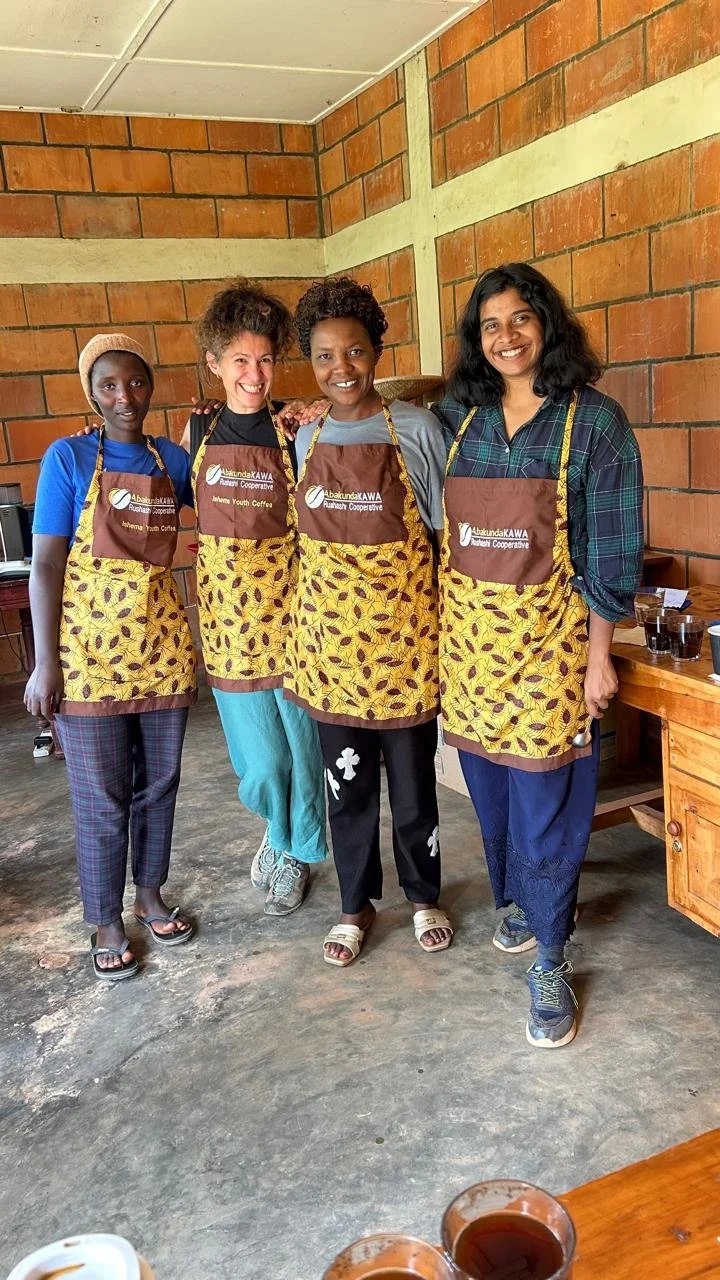
Train women and youth in farming, cupping and barista skills
Pillar 3: Strengthening Market Access, Quality and Cooperative Capacity
Increasing the value retained by farmers by strengthening cooperative capacity, improving market visibility and developing skills across higher-value
segments of the coffee value chain.
-
Purchase and repair sewing machines
Deliver sewing and vocational skills training
Strengthen financial literacy, savings groups and microenterprises
Provide barista training and access to value-added employment opportunities
Pillar 4: Advancing Women's Economic Empowerment and Income Diversification
Creating opportunities for women to diversify their income, strengthen financial independence and develop vocational and entrepreneurial skills.
-
Digitalise traceability systems
Strengthen due diligence processes and data collection
Improve communication and public transparency around sourcing and impact
Increase engagement between producers, buyers and consumers
Pillar 5: Strengthening Due Diligence, Traceability and Responsible Business Practices
Improving the ability of both Abakundakawa Cooperative and This Side Up to identify, monitor and communicate social and environmental risks while
strengthening transparency across the coffee value chain.

The key annual milestones achieved in this project.

PHASE A
November 2024 - May 2025
During this phase A, we conduct several types of research including baseline study, gender analysis, due diligence to understand the needs of the farmers and types of interventions we would need to implement. The agreements between the various partners were finalized, roles were defined more clearly.
Baseline was analysed and main interventions were identified
January 2025 - June 2025
In January 2025, TSU visited Rwanda to initiate the project with the consortium and support the completion of Phase A. Eight World subsequently conducted the baseline assessment on TSU’s behalf, with the findings consolidated into five key pillars that established the intervention pathways for Phase B and the remainder of the project.


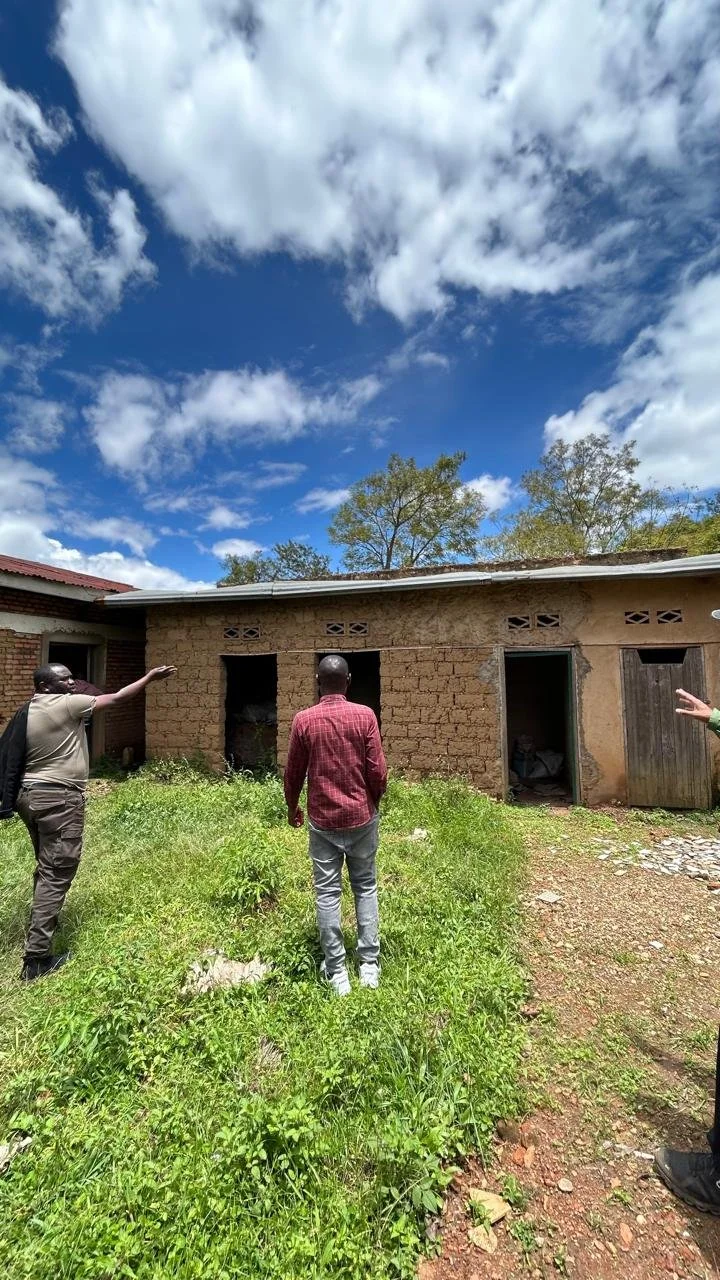
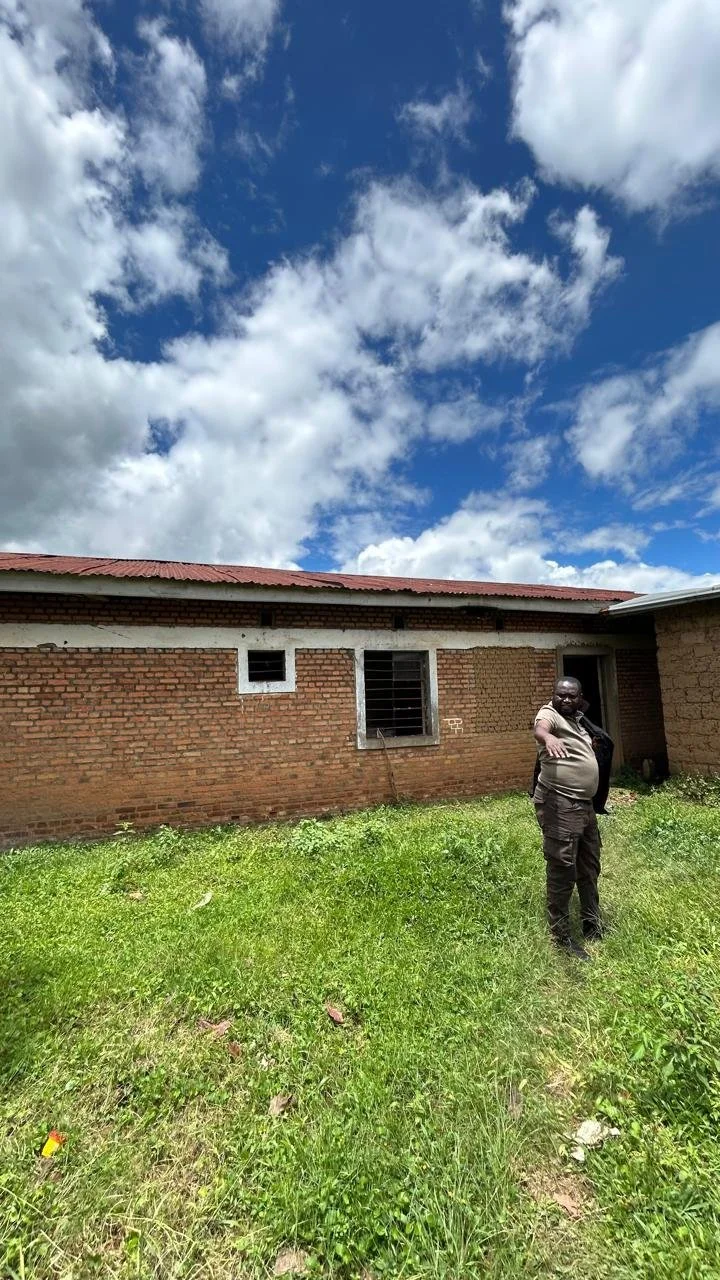
first blocks of child care center takes shape
2025 May - Ongoing
Two neighbouring unused buildings were identified for renovation into a childcare facility for young mothers to use during harvest periods. Following an assessment of the resources and time required, the cooperative began purchasing materials and renovation works in May 2025. The renovation is currently ongoing.
distribution of the tablets to be used for data collection
February 2025
To support field data collection, Abakundakawa Cooperative has equipped its field officers with tablets and internet access. As not all field officers have access to reliable smartphones, the tablets allow officers to collect and update farmer information digitally, helping build a stronger traceability system over time.


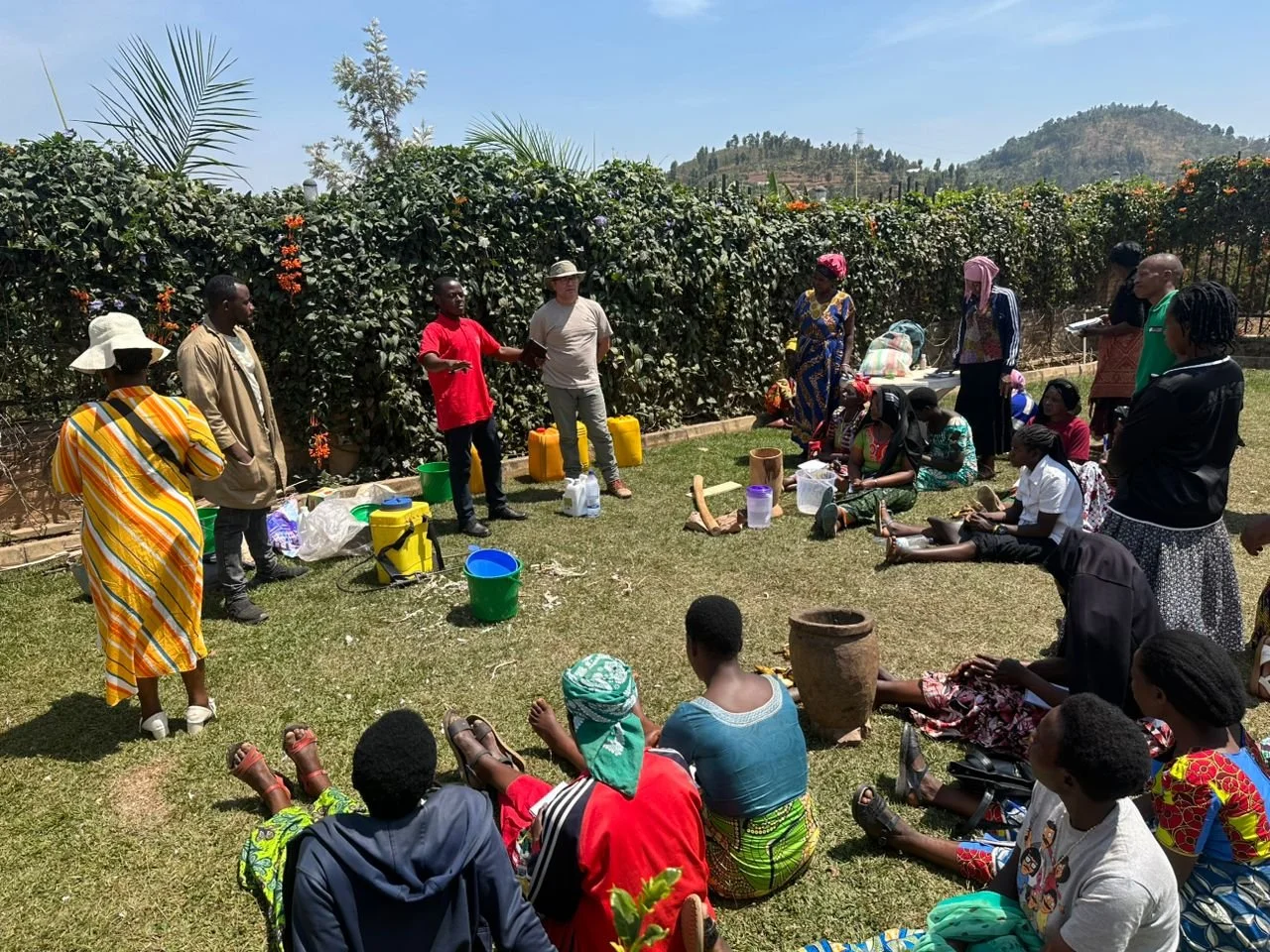
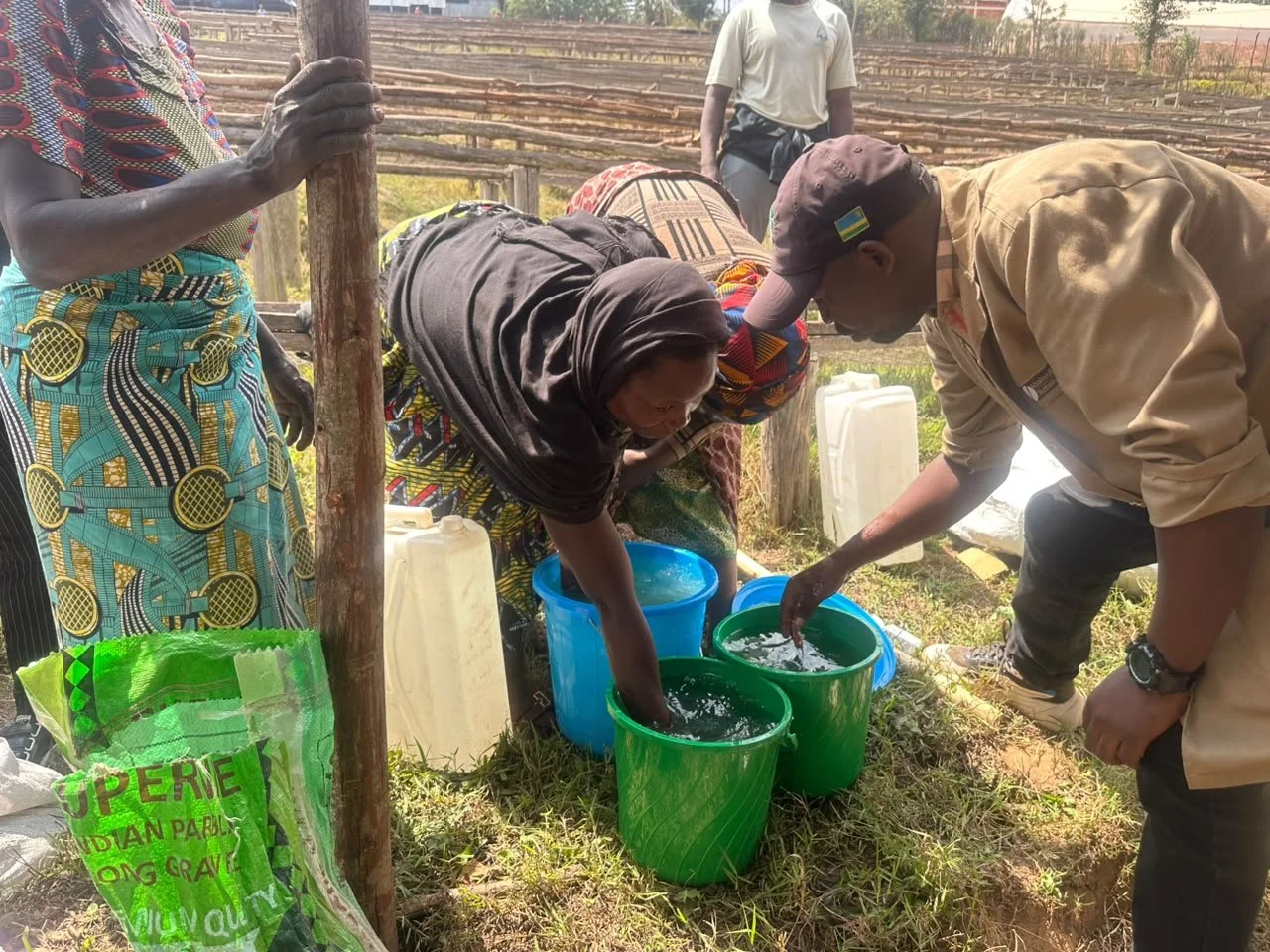
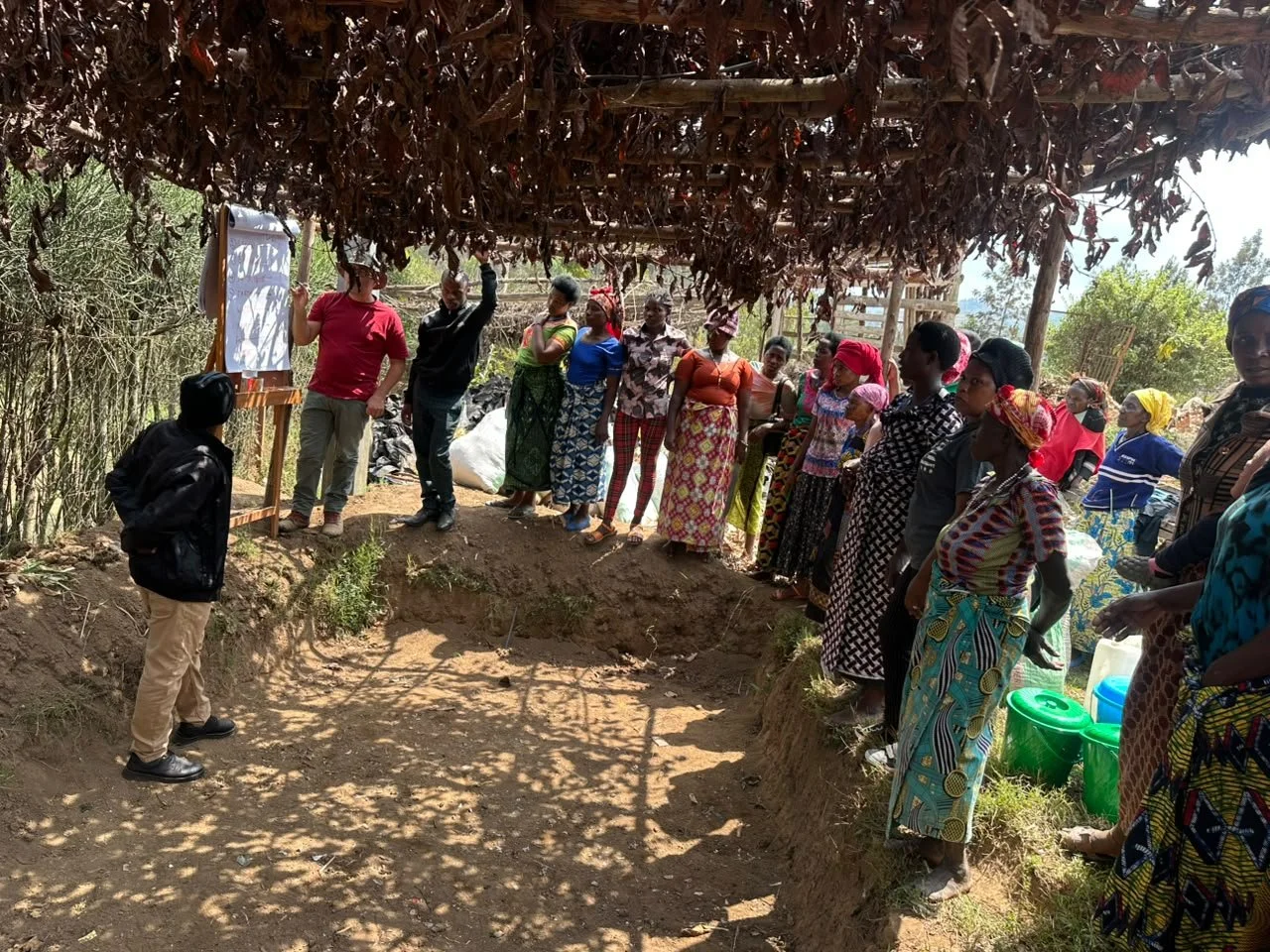
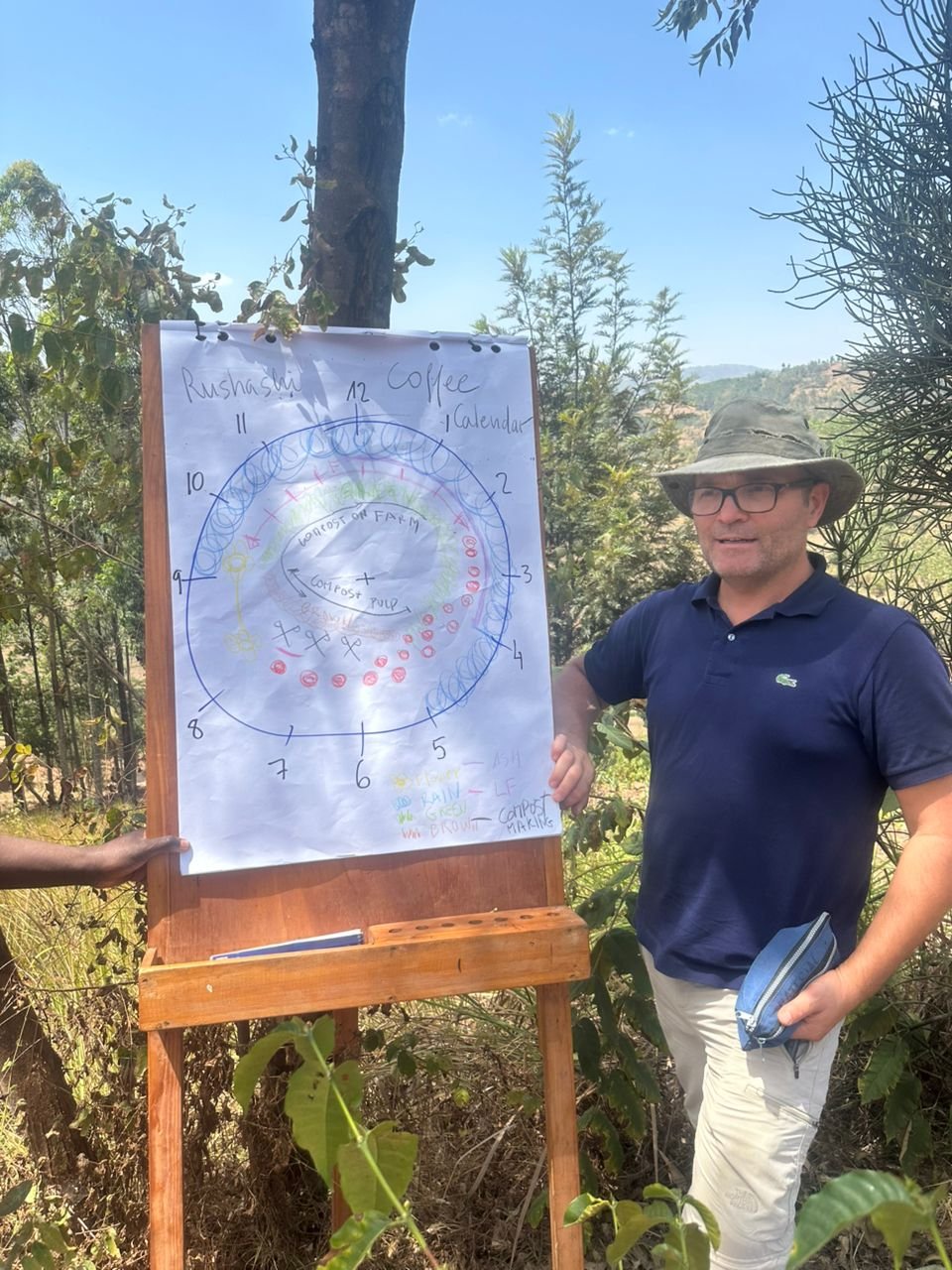
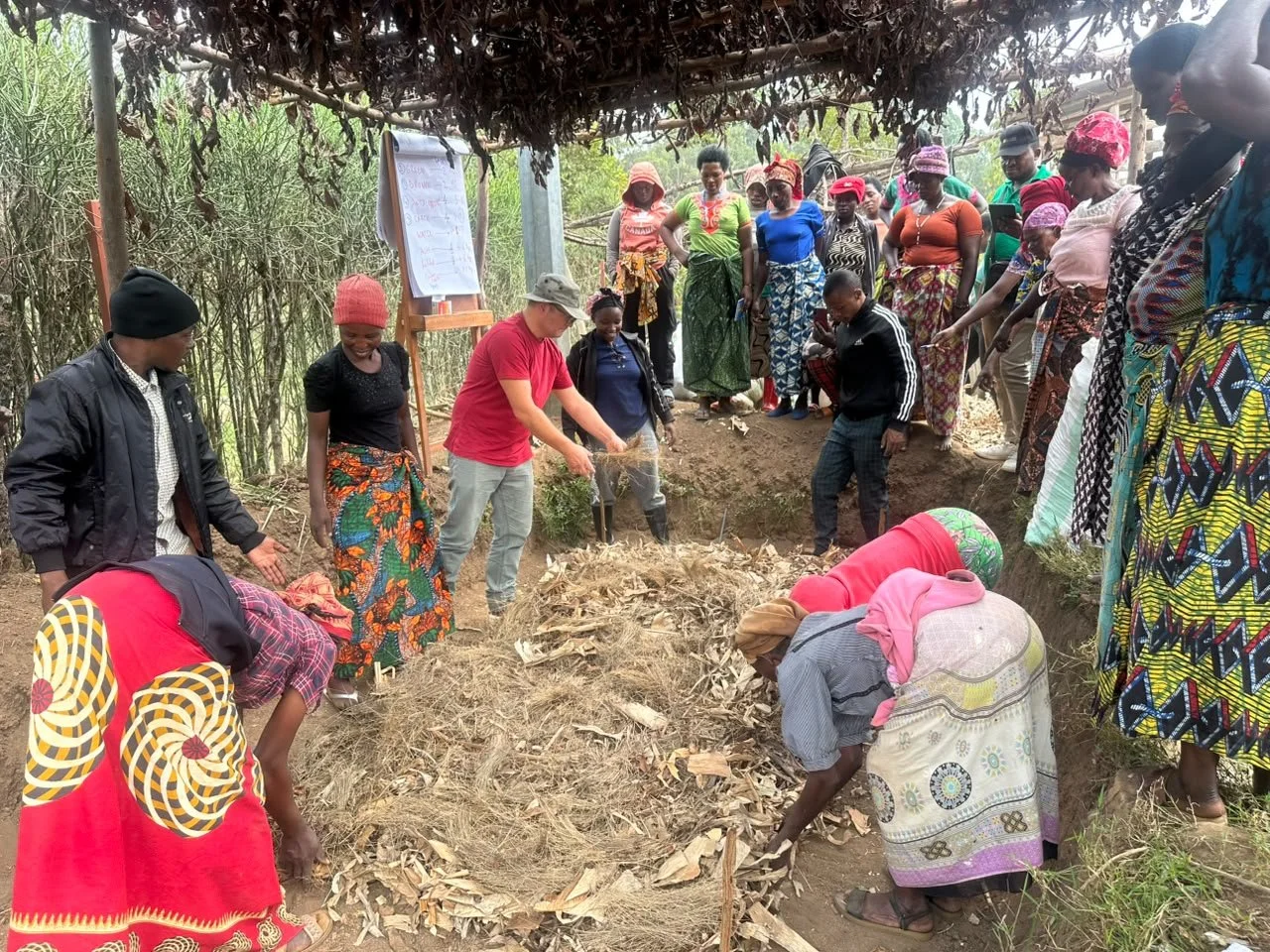
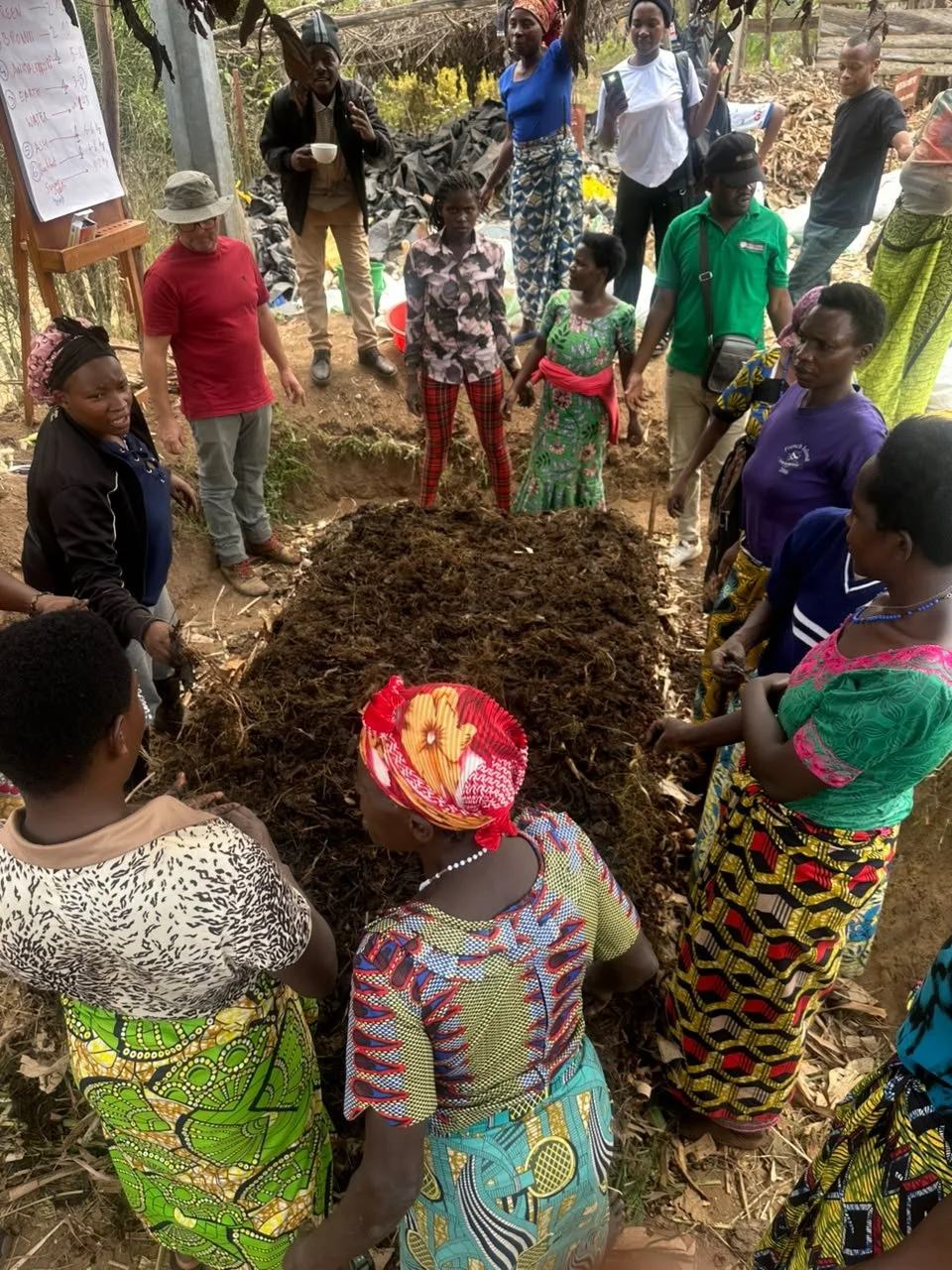
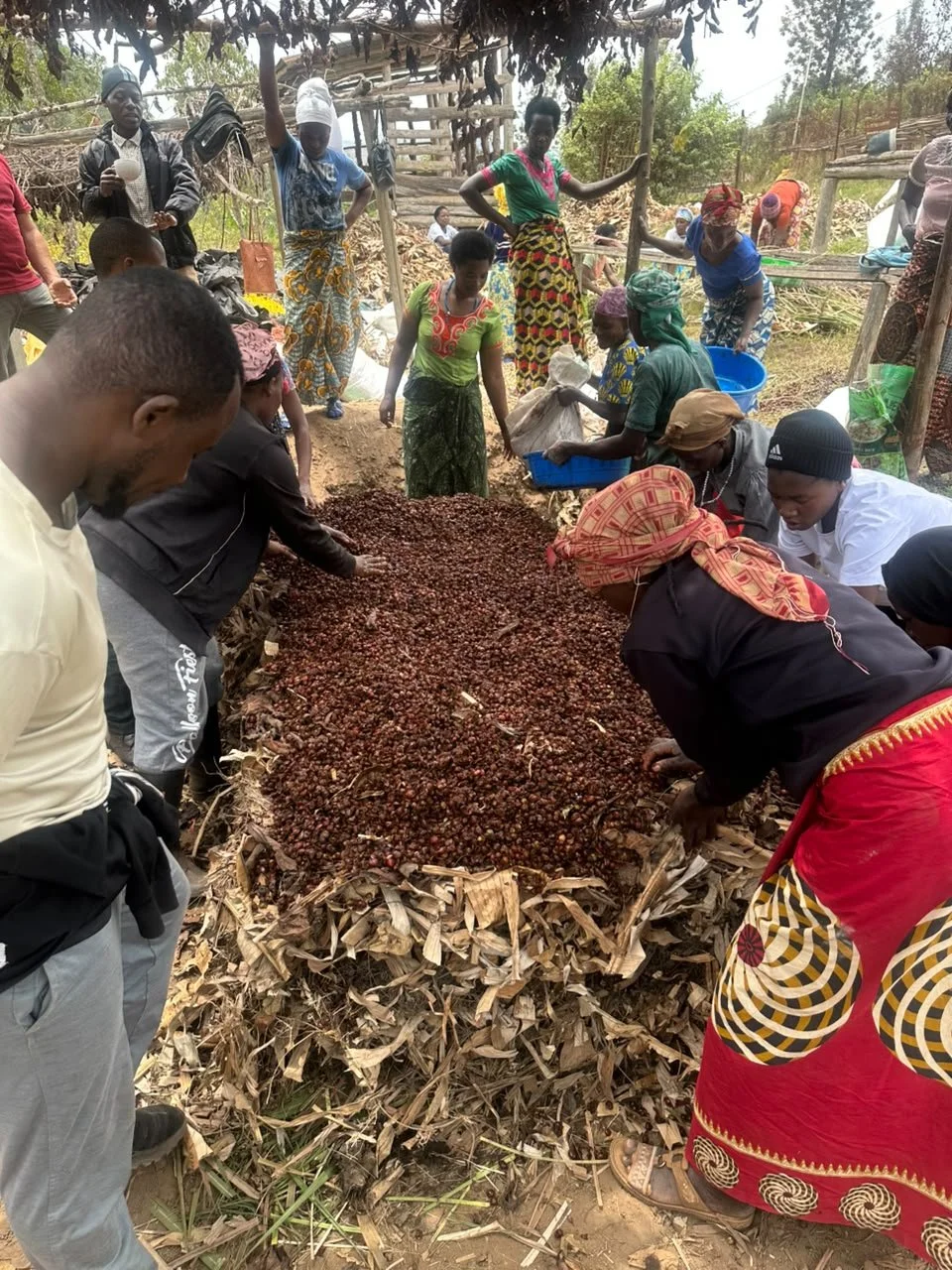
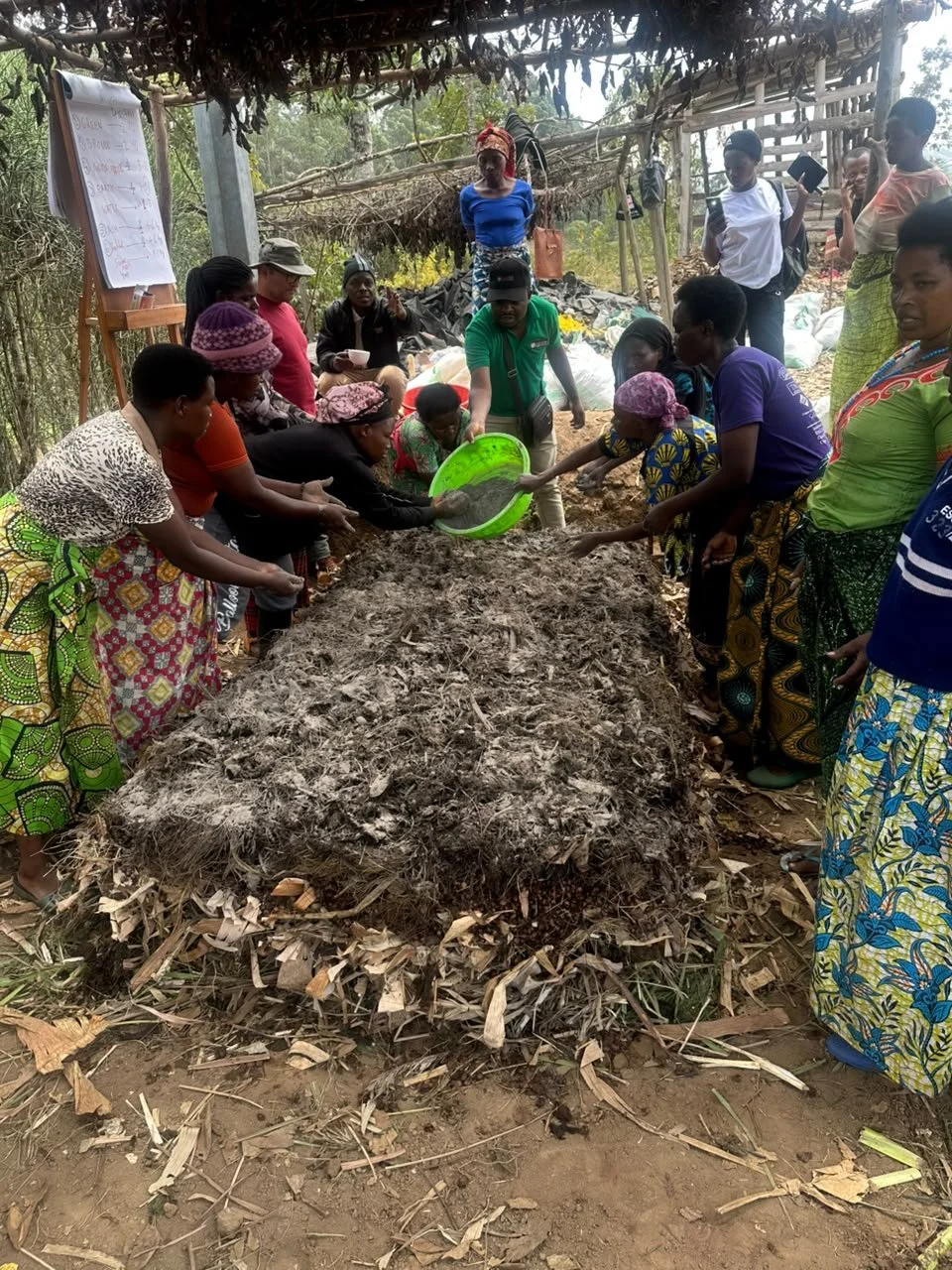
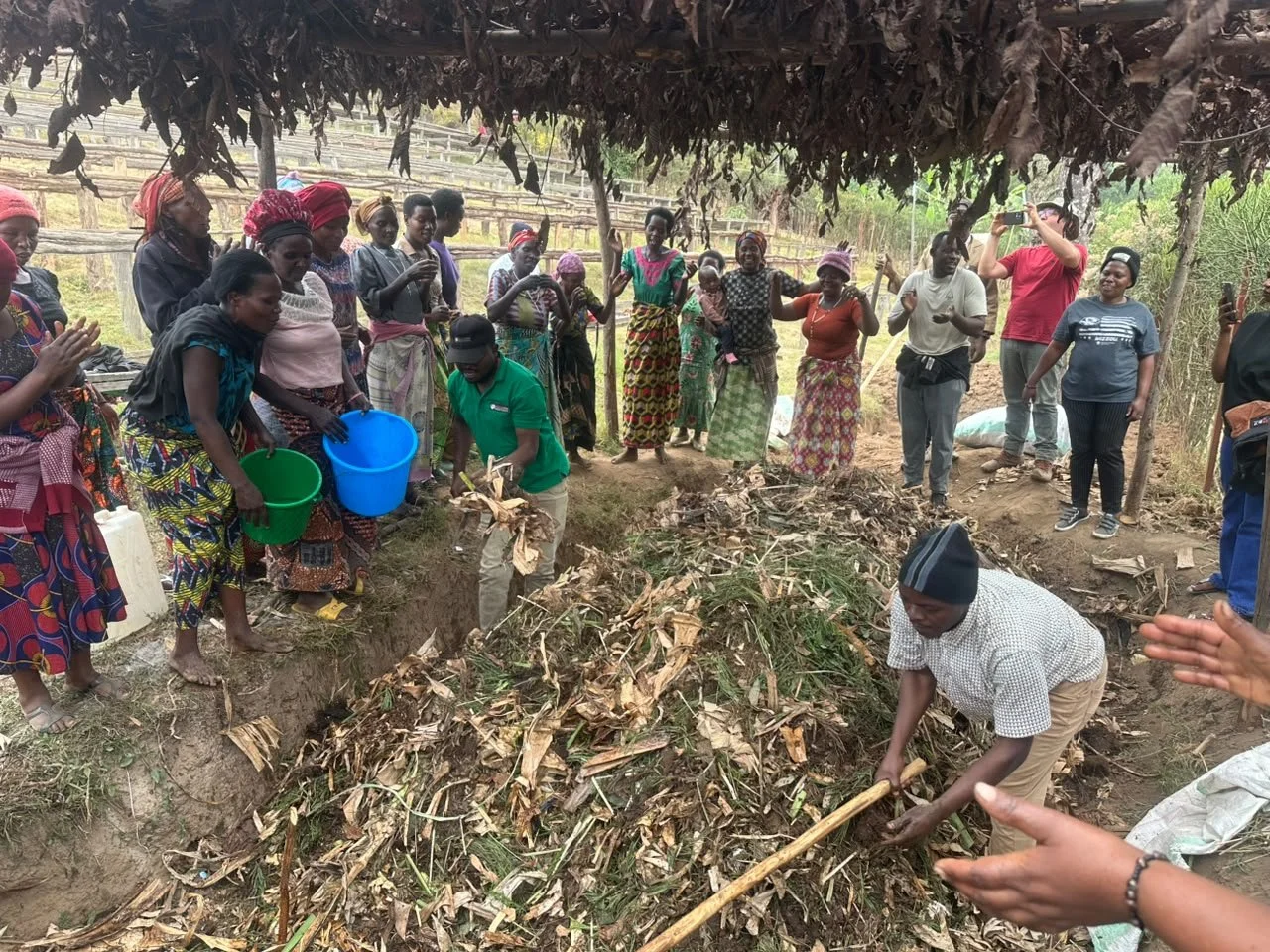
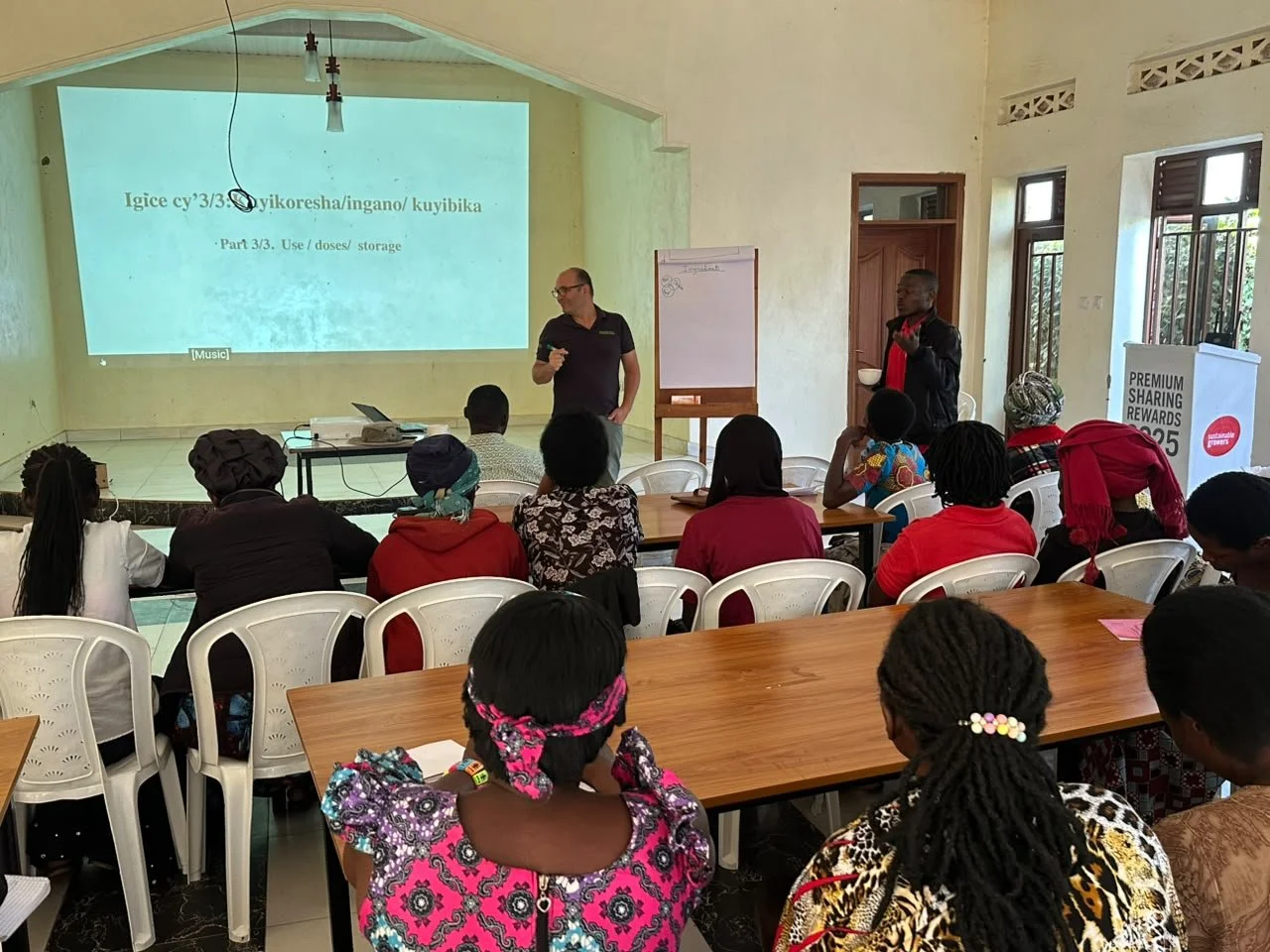
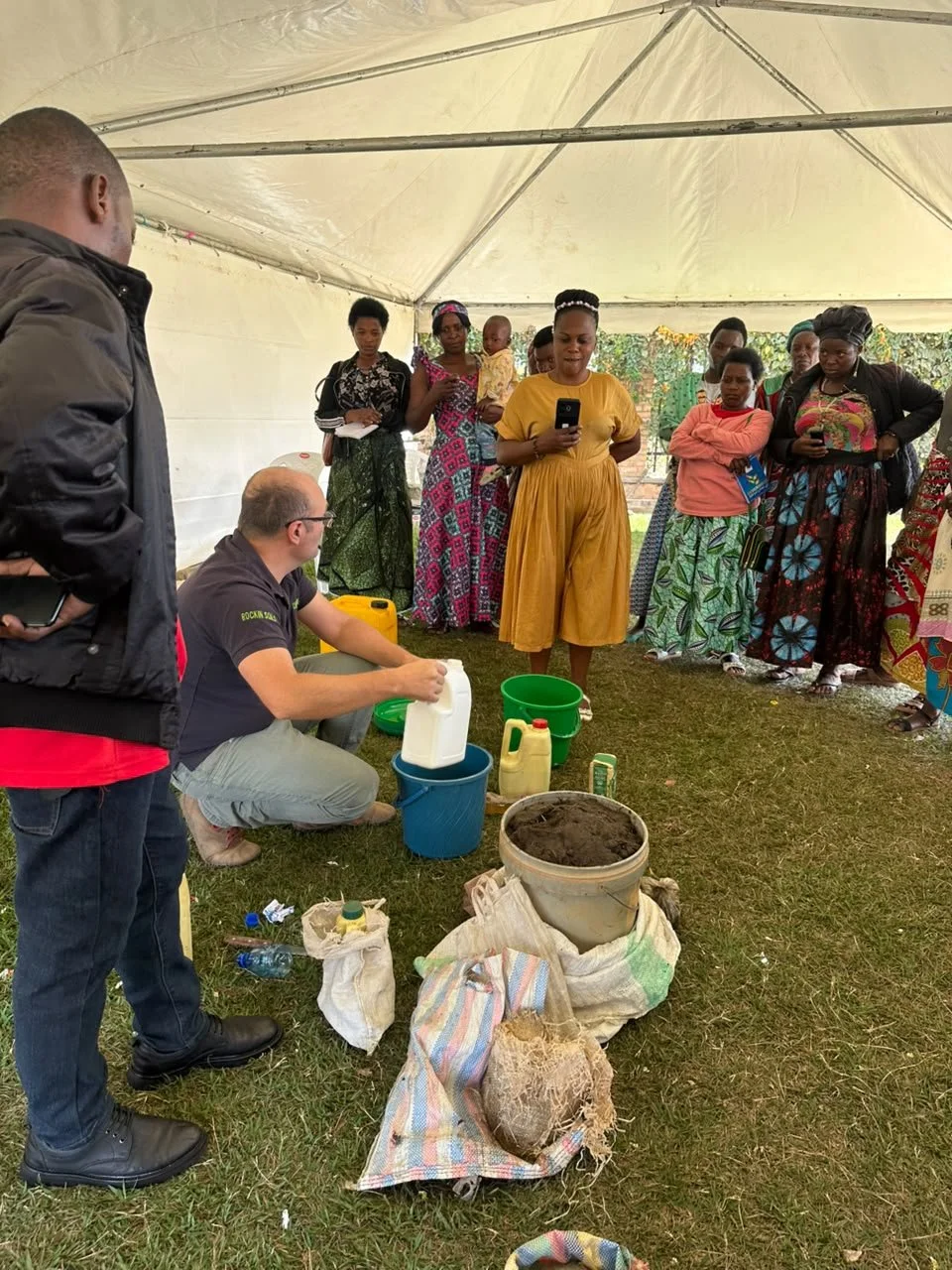
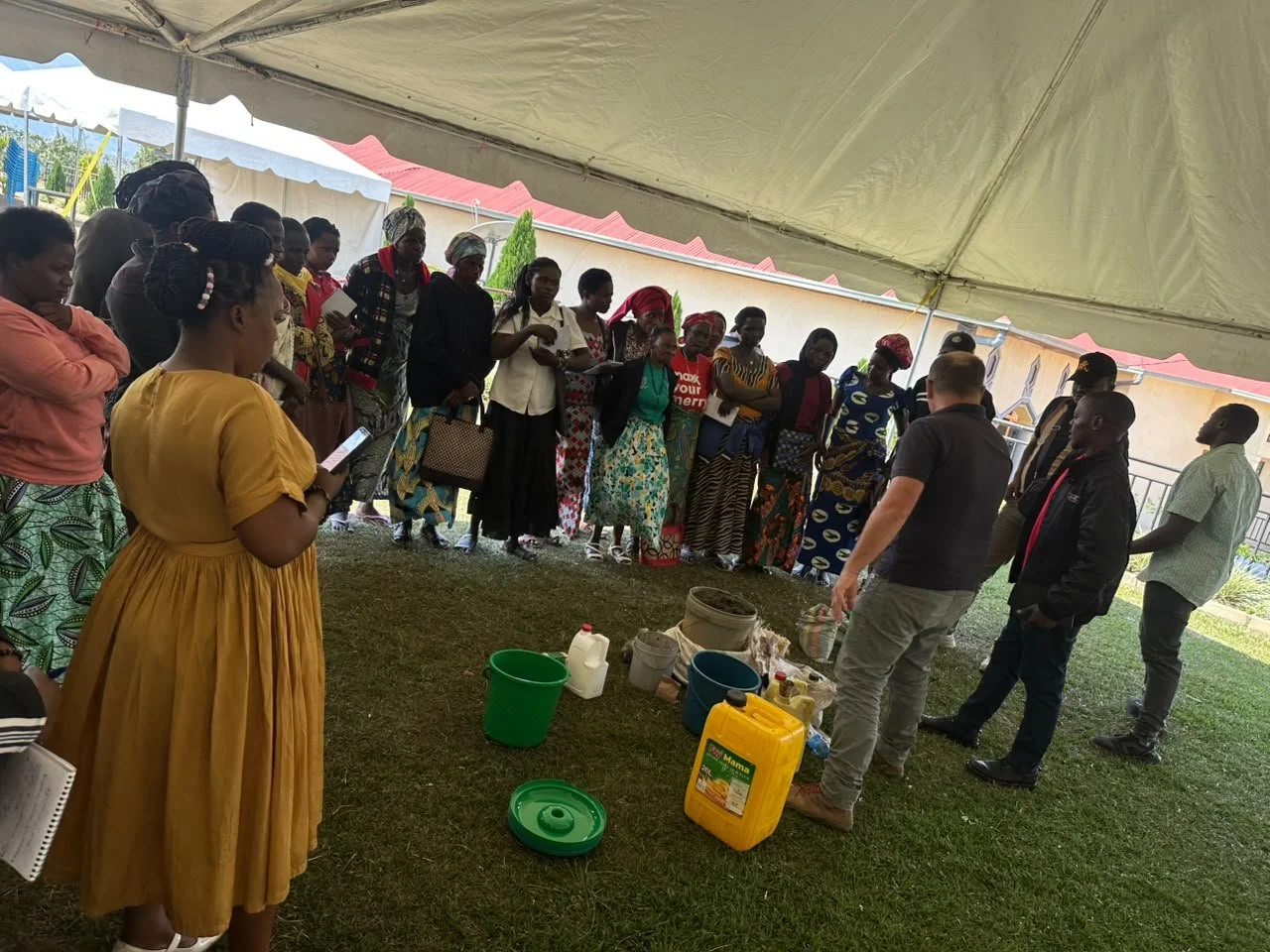
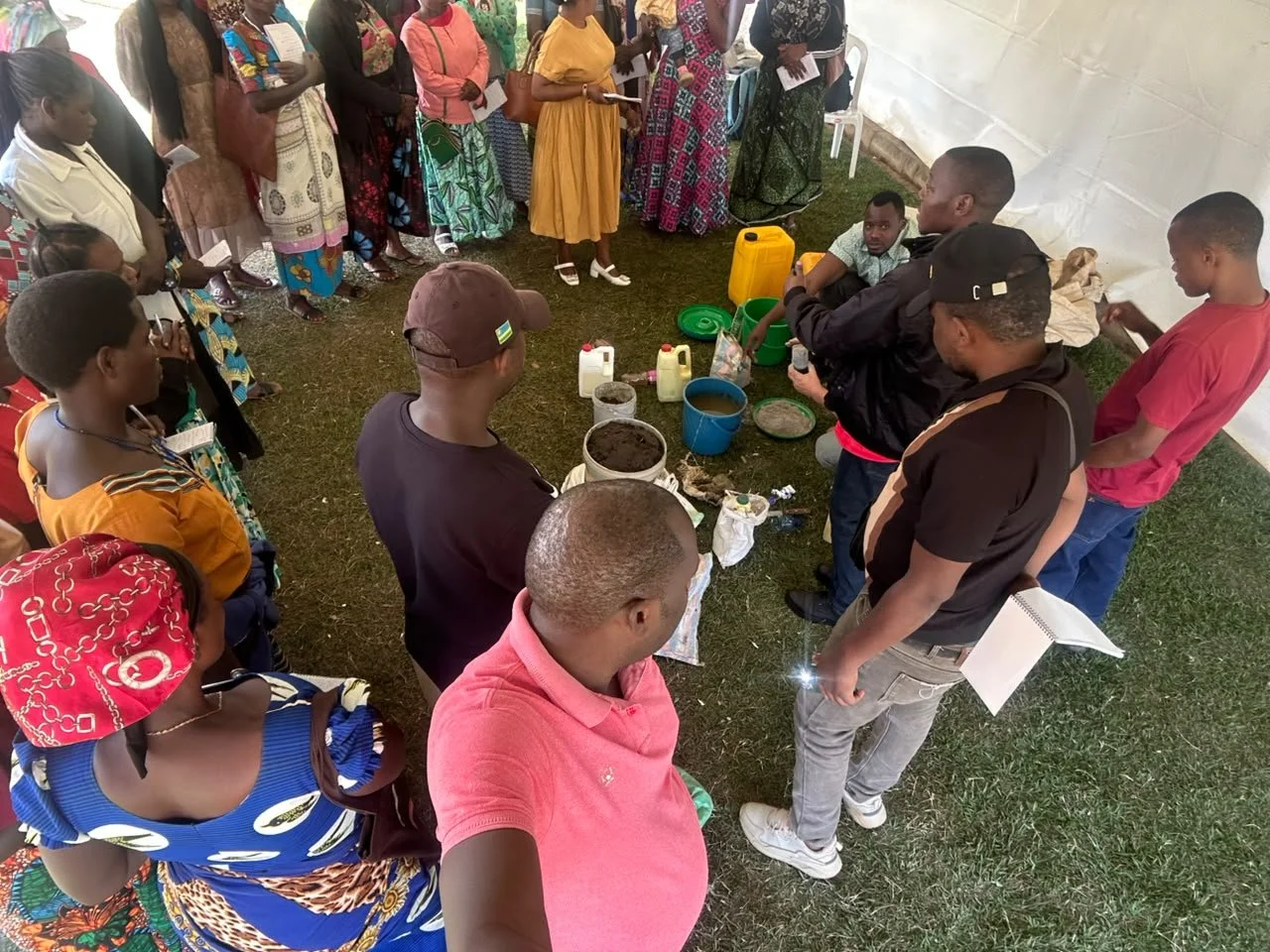
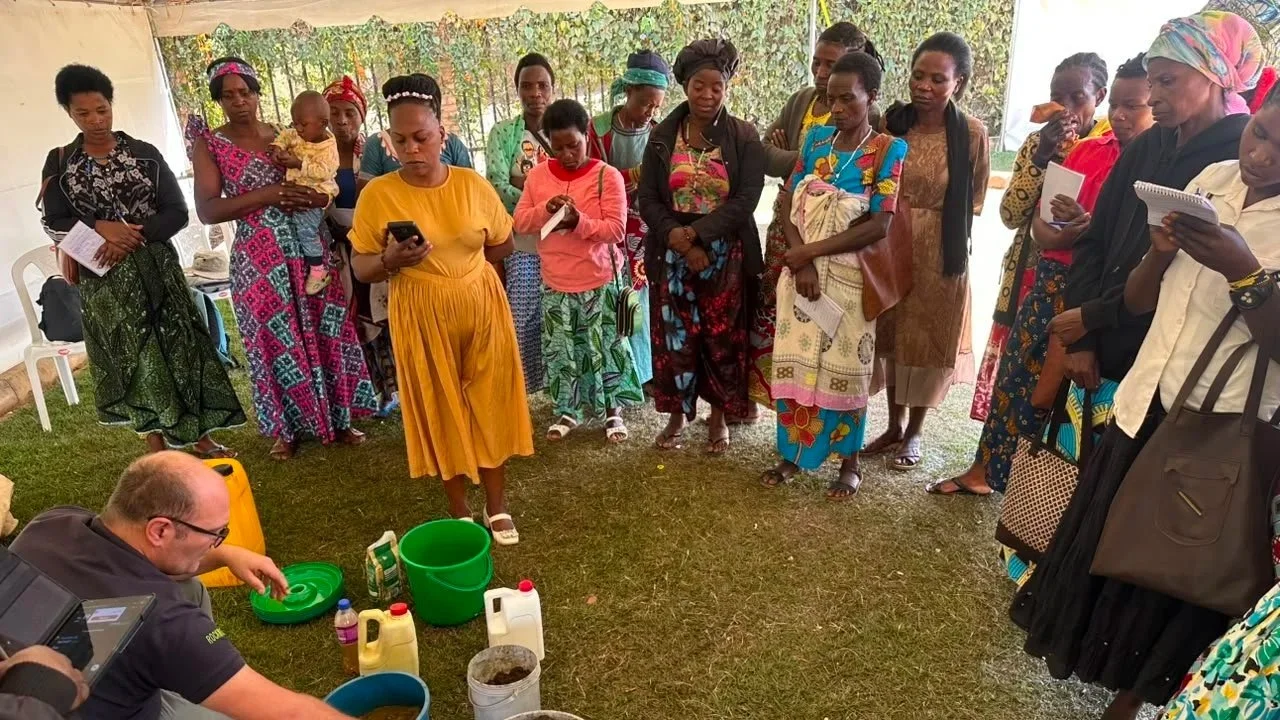
rEGENERATIVE TRAINING BY RUBEN TO HELP FARMERS CREATE INPUTS USING LOCAL MATERIALS
August 2026
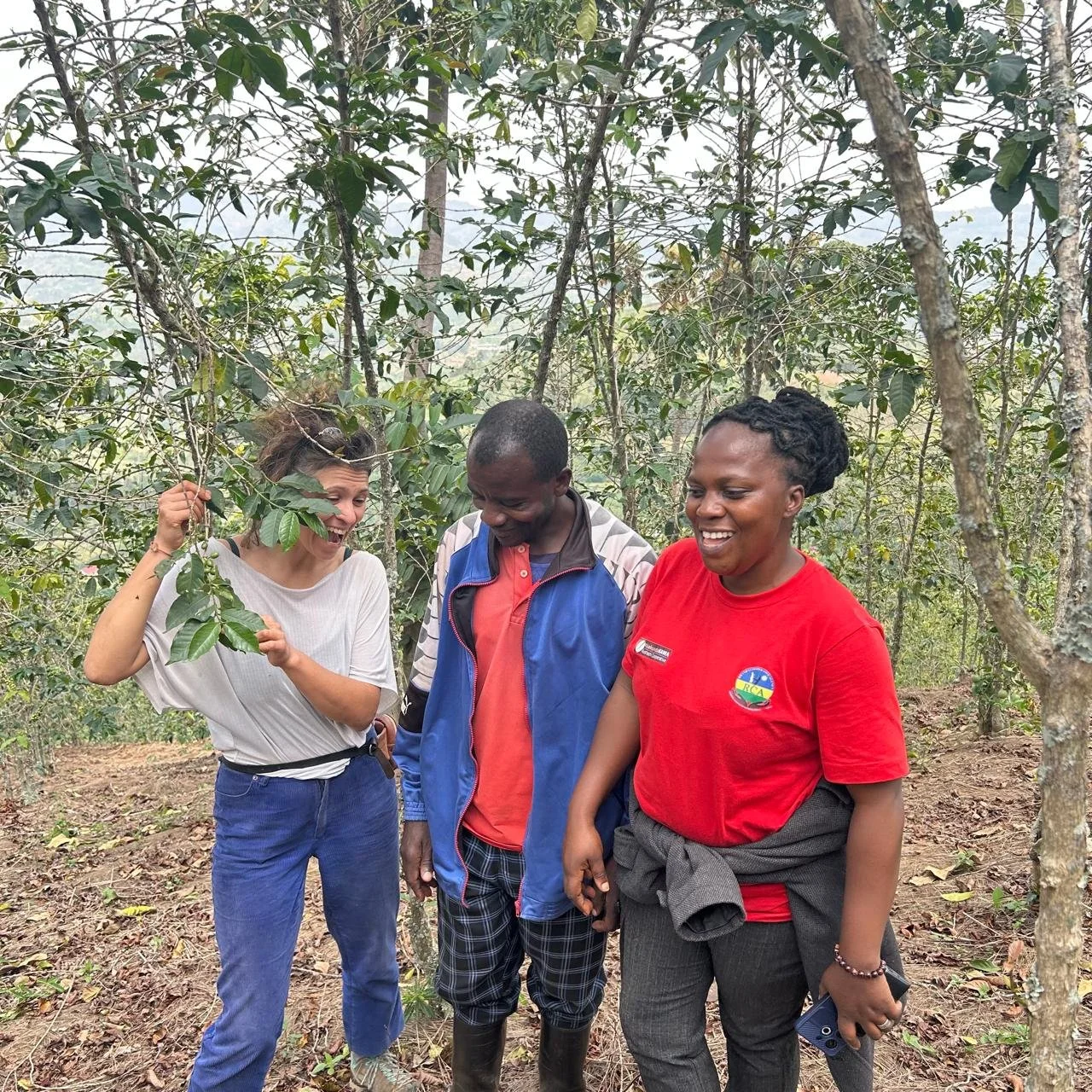
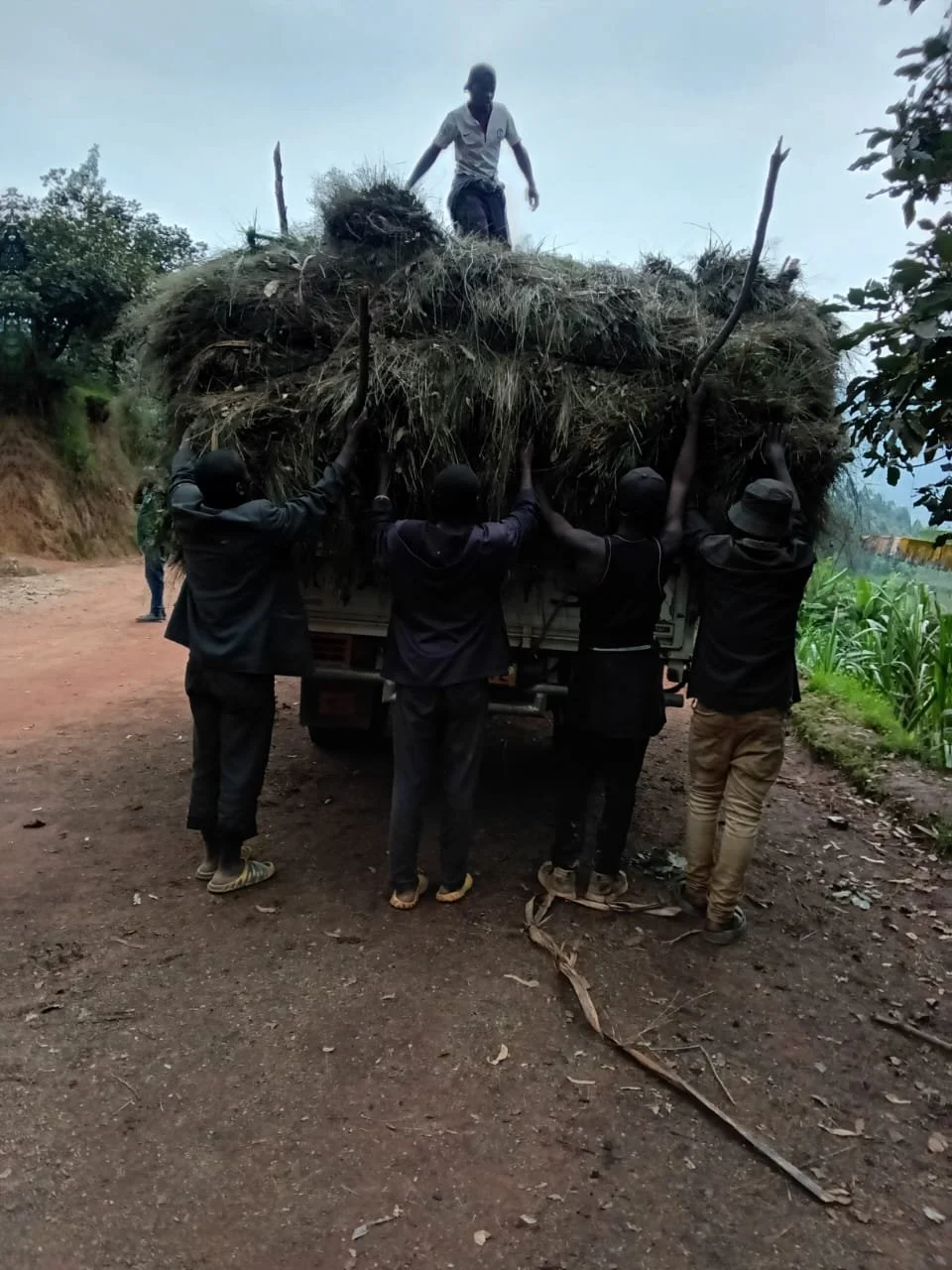
Farmers were offered regenerative agriculture training led by expert Ruben Borge, focusing on how to make organic inputs using locally available materials. The aim is to foster a regenerative farming system centred around soil health, creating healthier conditions for coffee plants to grow, become more resilient and experience less stress. The women farmers who will tend the 3-hectare demonstration plot—made available by the cooperative to the Hingakawa group—will now begin transforming the land into an agroforestry system, putting these principles into practice.
“On the side of generating income ,the project will help the women to have a financial literacy so they participate in decision making of their families, specifically to invest the money from the coffee. Also fostering diversification of incomes through making hand crafts and developing their ICT skills for better opportunities.
The child care will protect the right of to safe childhood. And regenerative practices will help these farmers improve their productivity.
In term of marketing ,the project will help the coop in general to access more long term coffee buyers as well partners like social lenders , NGOs etc… through participating in international coffee events and being active on social media. ”

A more detailed account of the project and how it came to be.
“For me it’s about Sovereignty: The most valuable agricultural inputs are those people can make themselves. Working with these strong women to produce organic inputs for their home gardens and coffee farms is an opportunity to turn knowledge into lasting local skills.”
THE QUESTION THAT SPARKED IT ALL
While we are, on paper, an importing company—and call ourselves a social enterprise—we have always found ourselves doing much more than trade.
The capacity of the TSU team is limited, but that has never stopped us from taking on things that feel much bigger than ourselves when there is an opportunity for farmers to capture more of the value created in the coffee chain and reinvest it in their farms and communities.
This time, the opportunity came through a grant. We asked our partners which of them would be interested in applying, and Antoine—then manager of Rushashi and now working with the cooperative as a spokesperson and consultant—said they could do it.
From the beginning, it was important to us that the cooperative and its farmers were in the driver’s seat. They would define what they wanted and needed; our role would be to help navigate the bureaucracy, bring in the right expertise and facilitate where we could.
The grant’s focus aligned closely with what Rushashi was already thinking about: empowering women, diversifying incomes, encouraging children to stay in school and investing in regenerative agriculture for the long-term viability of coffee farming.
And there is a bigger question behind all of this.
Rwandan coffee farmers often farm incredibly small plots of land. In a context where landholdings can be tiny, simply paying a better price for coffee—while important—cannot solve everything. There are limits to how much income a farmer can generate from a small piece of land, even when that coffee is sold well.
So, what else can we do?
This project is our attempt to explore that question together with Abakundakawa Rushashi. The cooperative has an extensive network on the ground and a team that can turn ideas into action, even when the ambitions and scale of those ideas sometimes feel much bigger than us.
The project brings together their knowledge and relationships on the ground, different experts and partners, and TSU’s role in facilitating and connecting the pieces.
Together, we hope to turn some big ambitions into something tangible: a childcare facility that can reduce the burden on young women farmers, opportunities to diversify incomes, better conditions for children to remain in school, and farms that become healthier and more resilient through regenerative agriculture.
Ultimately, we are not here to tell Rushashi what their future should look like. We are here to help them build the future they have already imagined.
The Hingakawa Agroforestry demo Plot
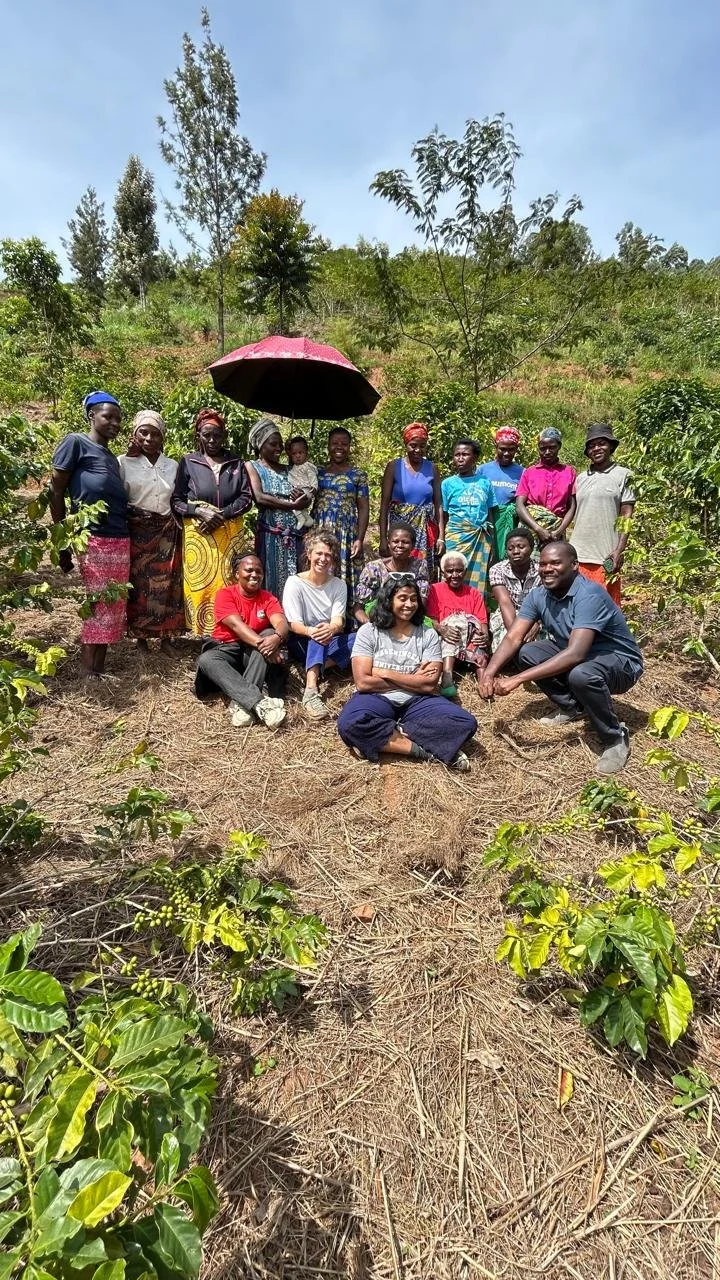
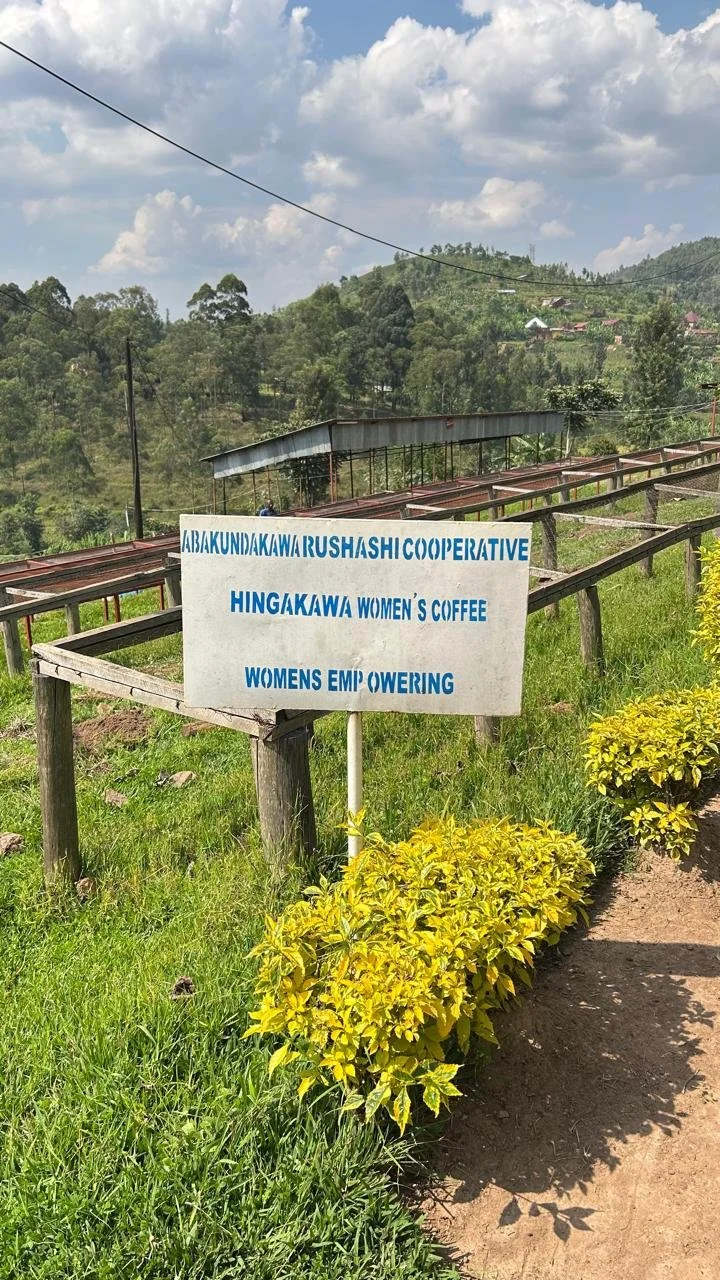
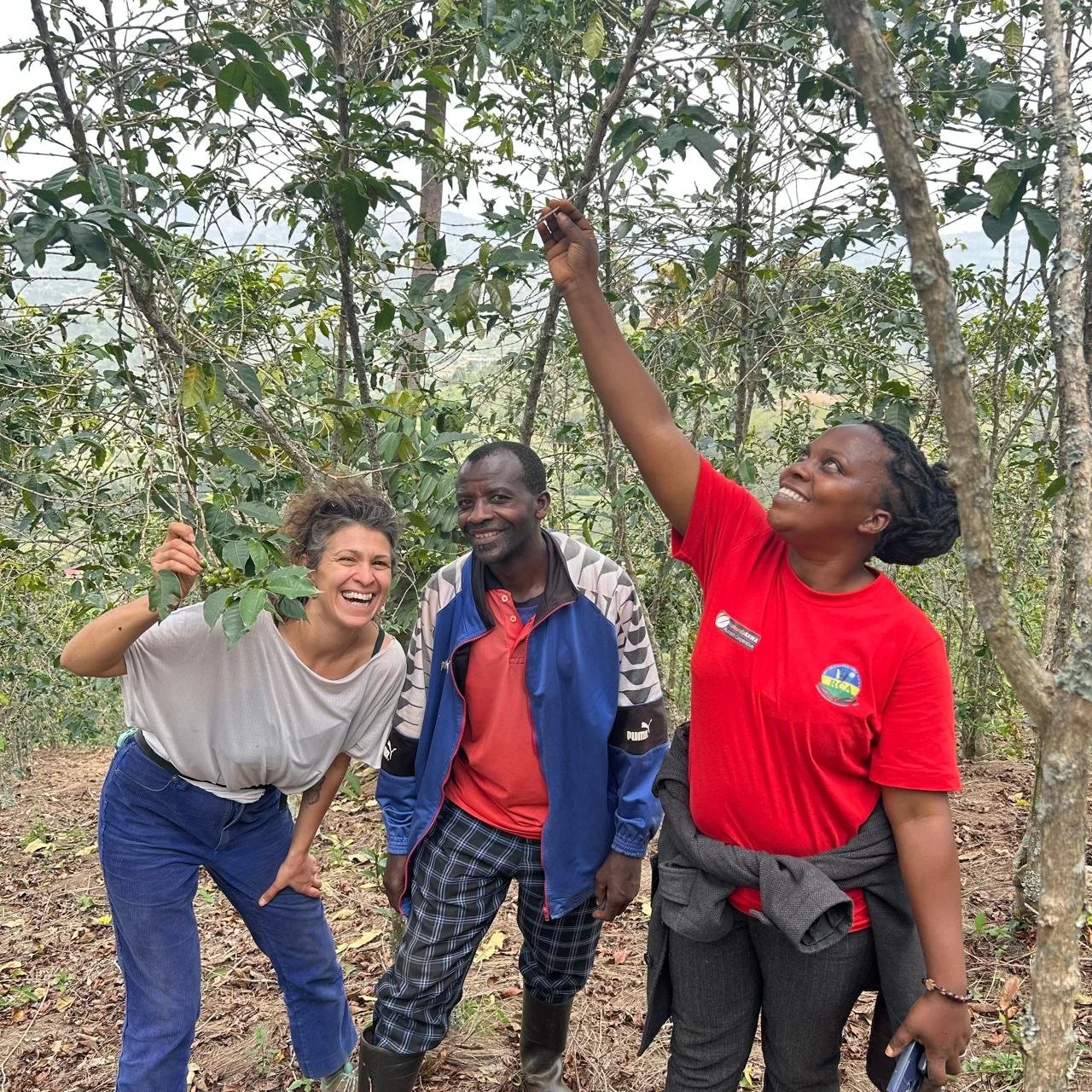
A 3-hectare plot in Rukura, Gakenke District, was made available by Abakundakawa Cooperative to the Hingakawa Women’s Group for coffee farming. The women collectively steward the land, managing the farm and sharing the coffee production and income among the group. As members of the cooperative, they sell their coffee to Abakundakawa.
As part of the project, the plot will gradually be transformed into an agroforestry demonstration plot—a diverse, productive and regenerative farming system where coffee grows alongside trees and other plants that support the health and resilience of the farm. The ambition is to create an agroforestry “paradise” that can serve as a living example for the surrounding community.
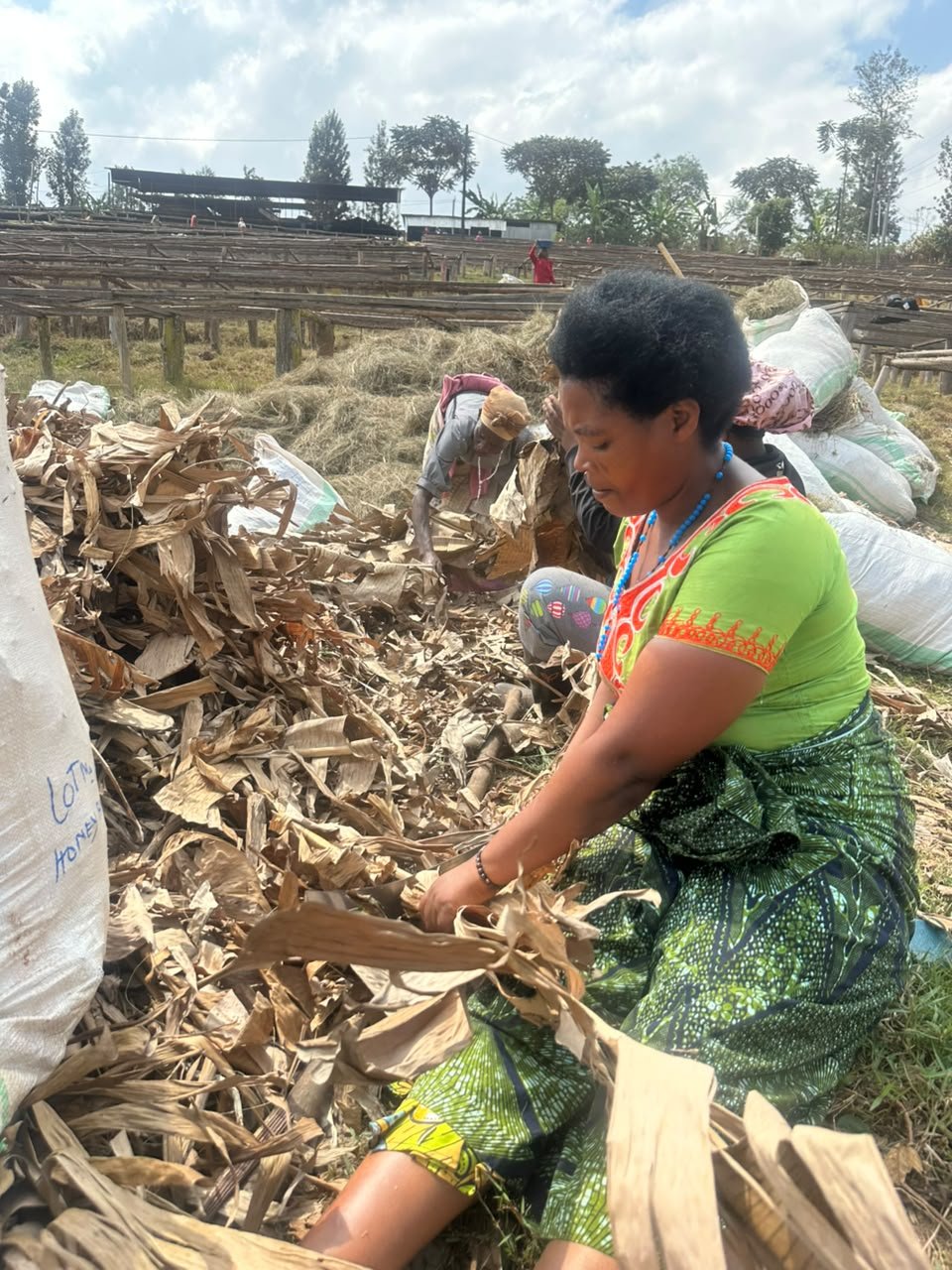
A Haney Soil Health Analysis was carried out to understand the condition of the farm. While pest management was initially identified as the main training priority, the analysis and field observations revealed that the challenges go deeper. Soil acidity, limited phosphorus and calcium availability, limited biomass for composting, and weak integration between weed management, nutrient cycling and water management all point to the need for a more holistic approach to farm health.
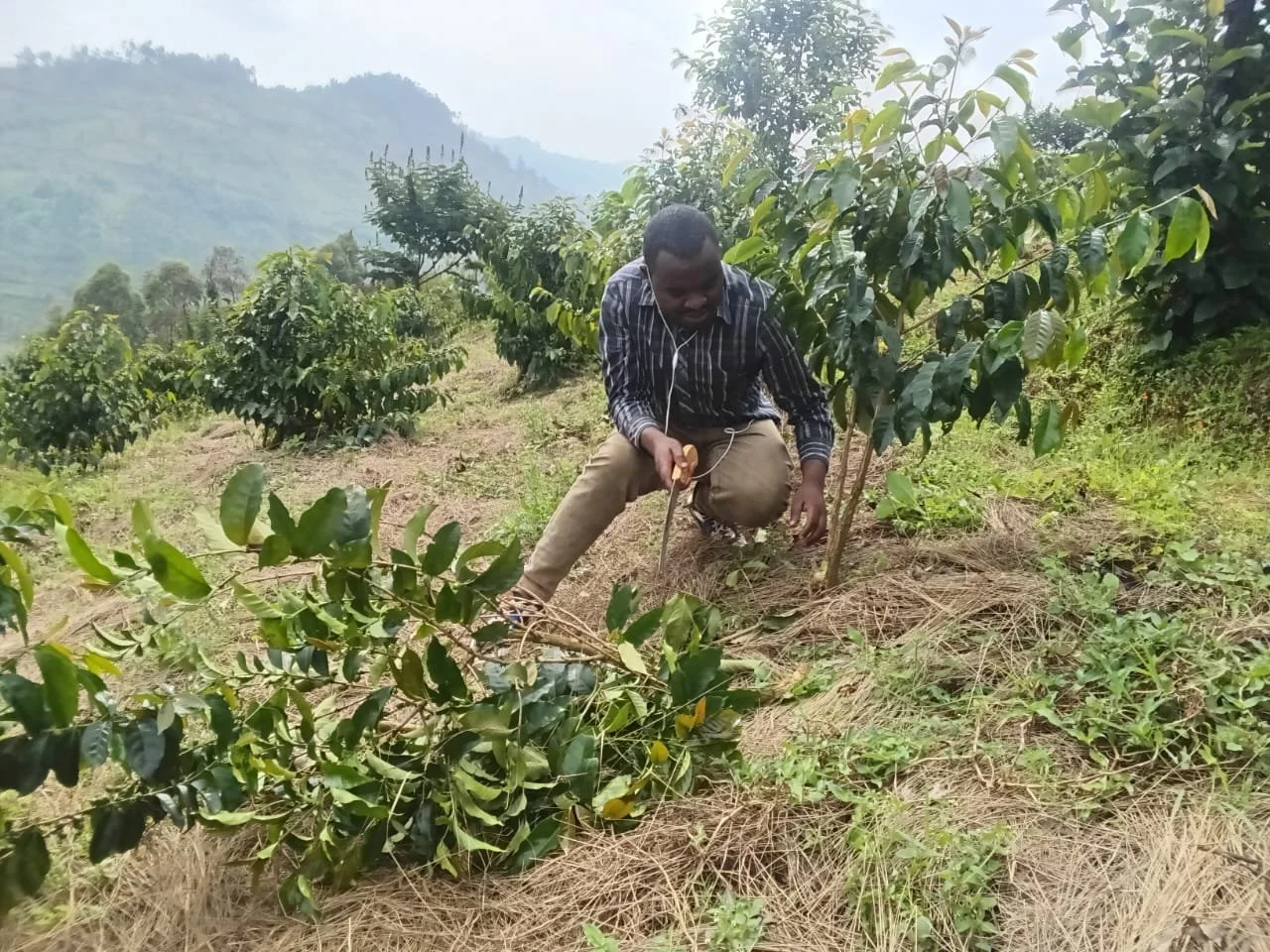
Regenerative agriculture expert Ruben Borge has already led a hands-on training with the farmers, focusing on compost, biofertilisers and biopesticides that can be prepared using locally available materials. The training has equipped the women with practical knowledge to begin producing and applying these inputs themselves as they prepare the farm for the 2027 harvest.
This is the beginning of a longer-term process: rebuilding soil fertility, strengthening the health of the coffee plants and gradually introducing more biodiversity and agroforestry elements to the plot. The women will continue to observe and manage the land, while the plot provides a space for neighbouring farmers to learn, experiment and take these practices back to their own farms.
The goal is to turn the Hingakawa plot into more than a productive coffee farm—it is intended to become a living field school for regenerative and agroforestry coffee farming.
WHAT WE BELIEVE IS URGENT AND POSSIBLE
The 3-hectare plot in Rukura, Gakenke District, stewarded by the Hingakawa Women’s Group, gives us the opportunity to explore what a different kind of coffee farm could look like. The ambition is to gradually turn this land into a food forest—a diverse agroforestry system that moves away from monoculture and creates a more integrated relationship between coffee, trees, plants, soil, water and the farmers who work the land. This starts with looking at the farm as a living system. Rather than treating each challenge separately, the women are learning to work with the organic matter available to them, build fertility from within the farm and create the conditions for the plants to become healthier and less stressed.
The location of the Hingakawa plot makes this particularly relevant. Situated on a slope, the land is highly prone to erosion. The first step is therefore to create catchment areas that can slow and hold water and nutrients rather than allowing them to run downhill. As the land becomes more populated with trees and vegetation, the root systems can help stabilise the soil, while the increasing organic matter can improve its capacity to hold water. A more diverse, forested system can also create a more stable microclimate. Heat waves can enter the system with a delay because of the cooling effect of vegetation, while drought can be better absorbed by living soil with greater water-storage capacity. Greater vegetation cover can reduce erosion, and less dependence on artificial inputs can contribute to cleaner water leaving the farm and moving towards communities downhill.
The point of the Hingakawa plot is not simply to plant more trees. It is to demonstrate that a productive agricultural system can exist without relying on monoculture and deforestation. By thoughtfully combining coffee with different trees and plants, the farm can build biodiversity, production and economic stability while becoming better able to absorb the shocks of climate change.And this matters because long-term investments are difficult to make when the immediate income from a small plot barely covers what a household needs. A farmer may understand the value of planting trees or rebuilding soil fertility, but still not have the means to invest in something whose benefits will only come years later.
This is where we believe a project can go beyond trade. Financing can create the space to make those long-term investments possible—not to replace farmers’ own agency, but to help them act on ambitions that would otherwise remain out of reach.
For Hingakawa, the hope is that this land can become a thriving example of what is possible: a productive farm, a field school for neighbouring farmers and a place where the women themselves can build knowledge and confidence to take these practices back to their own farms.At the heart of it is dignity and self-sufficiency: creating the conditions for farmers to build healthy land, generate value from it and, over time, have greater power to ask the market for stability rather than simply having to accept what it offers.
FUTURE PLANS
Following Ruben’s training in Rushashi, the next step is to establish a small lead team within the cooperative to keep the work moving. Honore, the interim agronomist and quality control lead, and Jacqueline, President of Hingakawa, will take responsibility for following up on the practices introduced during the training and making sure implementation begins with the next harvest cycle.
The intention is to build this into the cooperative’s own way of working rather than making progress dependent on Ruben, TSU or any other external support. With Antoine continuing to support the cooperative, the lead team can help turn the practices introduced through the project into something the cooperative can gradually internalise and carry forward.
The field officers are already collecting substantial amounts of farmer and farm-level data. With clear methods and consistent indicators in place, this existing infrastructure can also be used to measure how the farms are changing over time—making it possible to track progress rather than relying only on periodic updates or observations.
Ultimately, the goal is for the cooperative and its farmers to see the benefits of these practices for themselves during the lifetime of the project. If they can see healthier land, stronger plants, better productivity or other tangible improvements, the incentive to continue investing in these practices after the grant ends becomes much stronger.
EVIDENCE
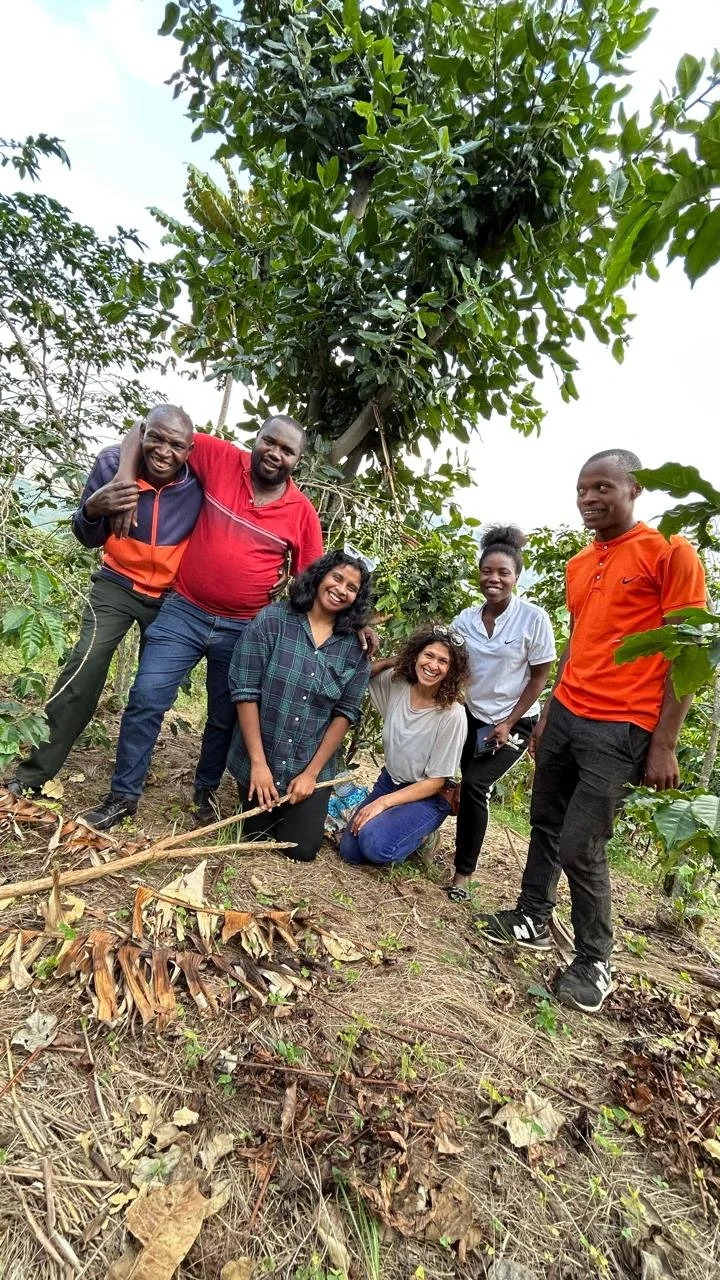
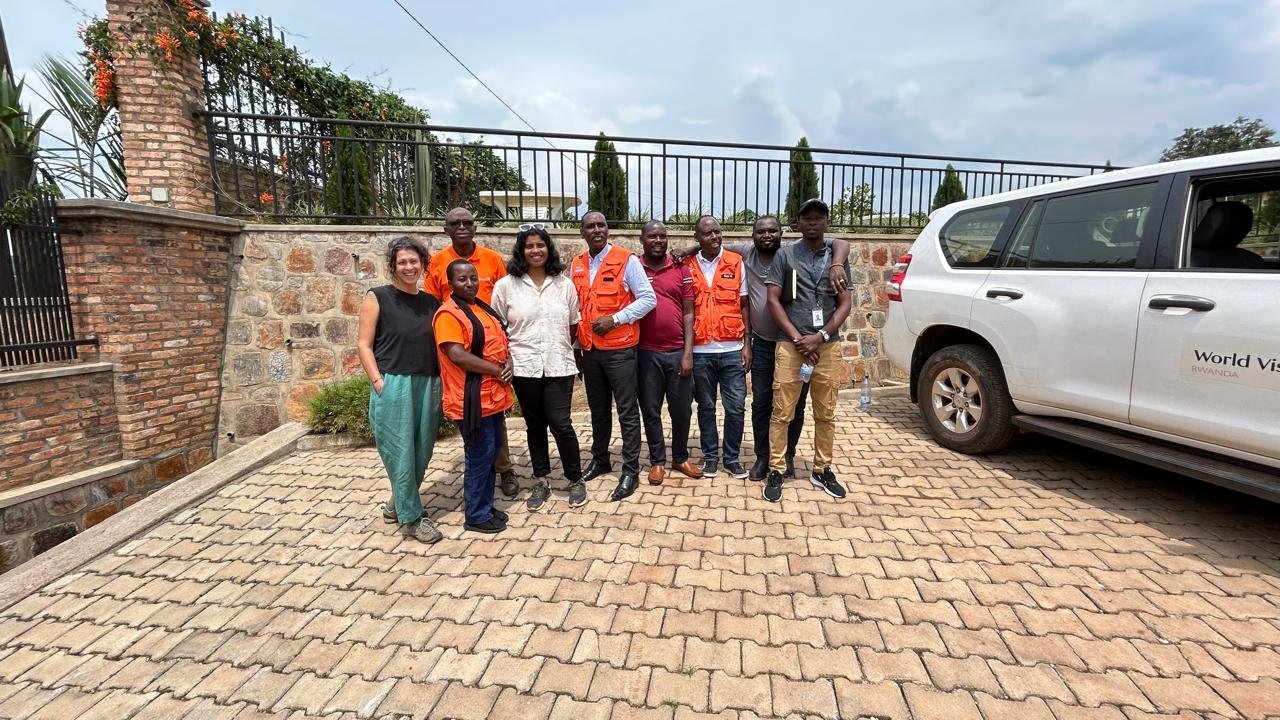
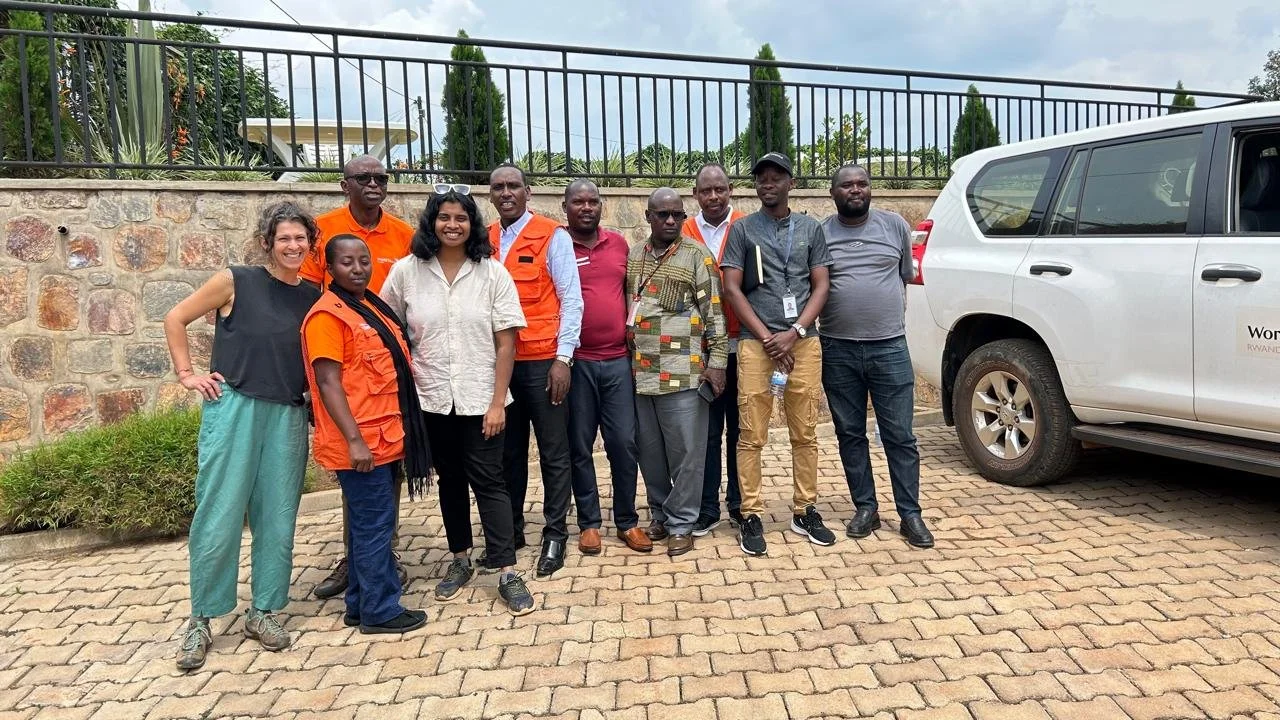
Project images:
Feel free to use when supporting this initiative.