
A FRESH BEGINNING
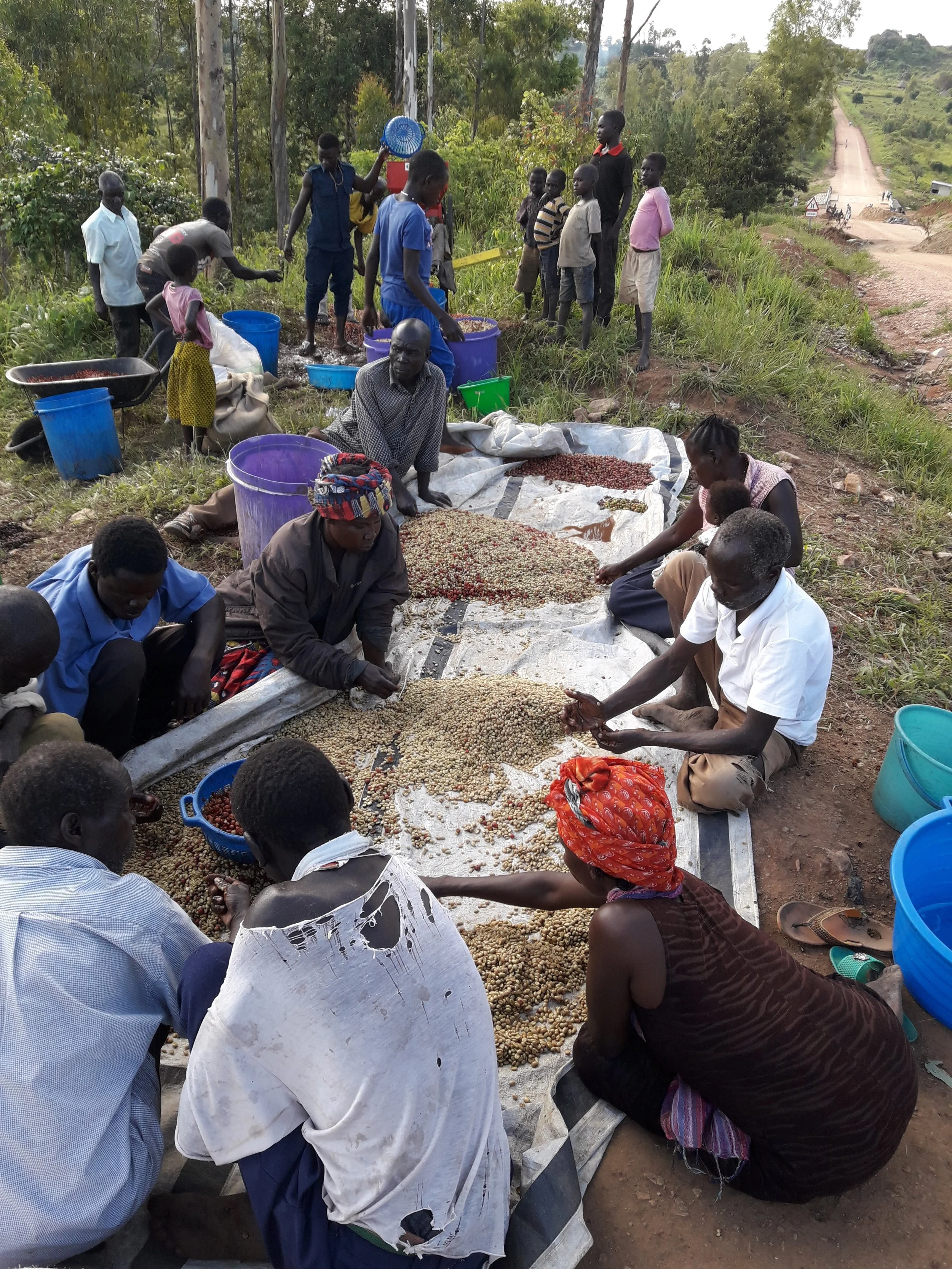
The Ajere coffee microstation group was formed in 2018. Members constructed the microstation with help from Oxfam Uganda via Agency for Community Empowerment. The microstation started producing parchment coffee in the 2018 harvest. After several years a dispute arose between the founding committee made up of family members who owned the land the microstation was built on, and a new committee elected by the wider membership. The microstation was moved from its original site to a new site and re-built from scratch.The farms are traditional for the Alur Highlands coffee region of north-west Uganda. They are small, averaging half an acre of coffee or about 300 coffee trees. The coffee is mostly grown under mature shade immediately around the family compound, and is interplanted with various food crops including banana, cassava, beans, potatoes, etc. All the microstation farmers are certified organic under Japanese (JAS) standards.
CULTIVARS
SL14
elevation
1378 meters
NOTABLE
This microstation has a total of 321 members out of which 254 are men and 67 are women.
PROCESSING
FULLY WASHED
The ripest cherries are picked, floated and handsorted, pulped, fermented in 240-litre bins for 2 nights, washed and re-sorted before drying. It starts out as drying trays outside brought into the store at night finishing off the drying on tarpaulins. The drying period varies with weather conditions; min, 2 weeks, max 4 weeks.
-
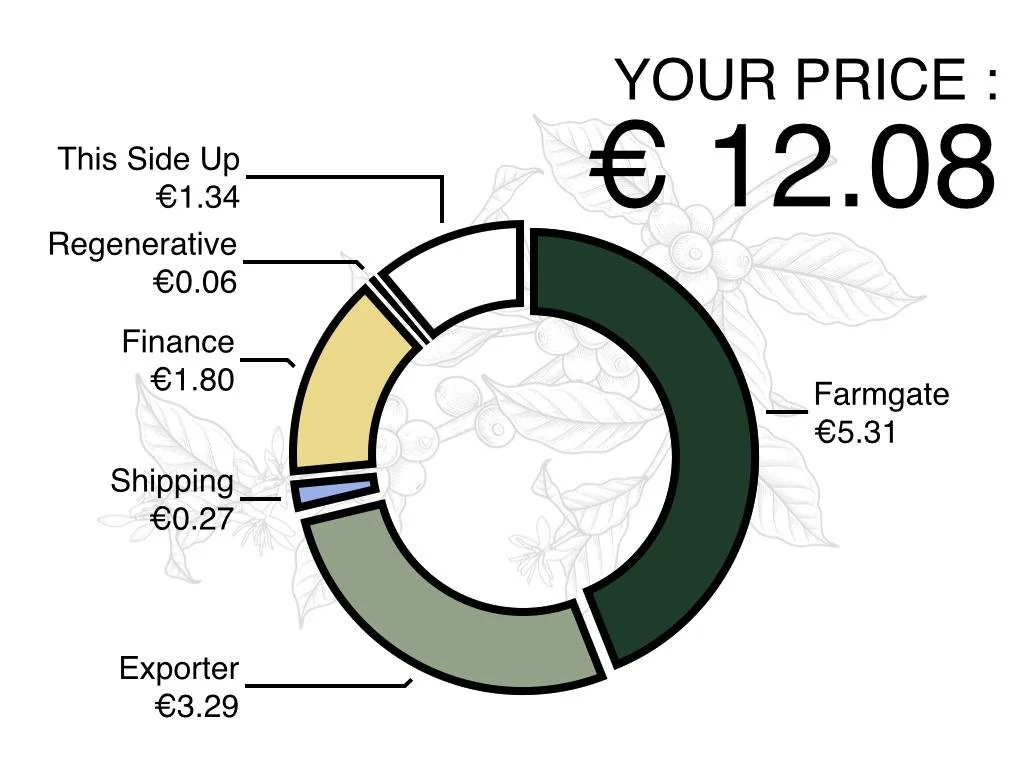
The price you pay for Culamuk natural p/kg. We agreed on this price directly with the farmers, disregarding the volatile US Coffee C price.
-
The microstation buys red cherries from the farmers. They process it and then send the dry coffee (in parchment form) to Zombo for final milling, sorting for it to be made to export grade. Farm gate in this case includes price paid to the farmer and the primary processing done by the microstation.
-
International shipping from Nebbi (Port of loading - Mombasa, Kenya) to Rotterdam, Netherlands. It is inclusive of freight, customs, insurance and warehousing costs.
-
Average financing cost owed to (mostly social) lenders. This ensures immediate payment to the farmers when the coffee leaves the farm or port.
-
A standard TSU premium on all coffees designated exclusively to accelerate farmers’ own regenerative agriculture project.
-
This Side Up compensation for spending time and resources importing this coffee. Our work includes year-round contact with producers, managing export, shipping, import, warehousing, grading, sampling, finding and keeping roasting partners for Zombo. € 1,34 is This Side Up’s Model 1 markup. For a full overview of our modular margin construction, see the Trade Models page