In a situation of extreme poverty, survival is what counts. You want your kids to go to school, and the school fees need to be paid. You work with a cash crop to cover for those bills, and the other crops of the farm are for daily food. The cash crop is often coffee, and even more so often, little pride is taken into it. You just have to do it.
The microstation model of Zombo Coffee Partners reaches a lot of people. Many smallholder farmers are connected to the microstations where they deliver their coffee. With the geographical span and the different specializations of these microstations, the taste profiles differ quite a bit. This is good for a mixed portfolio of flavors. However, you end up buying a little bit everywhere. And when the market is as high as it has been, the competition pays the same, just to get “coffee” in a tight market, it makes your proposal and connection to the coffee producers limited.
On the other hand, the This Side Up network believes and lives strongly in integrated value chains, where a coffee consumer and a coffee farmer will be connected year on year. In order to make that happen here, we decided to focus on one microstation, the Ndhew microstation. It has several small villages connected to it, amongst them the village where the Basic Income project is being done. It’s also the village that for the last few years, had been performing very well on the cupping table. It was also this fact that led us to selecting it as the starting place of the project.
For the first time this year, we are buying coffees from different buying points within the Ndhew Microstation instead of bulking it. We call them microlots.
It gives us several things:
the ability to give quicker feedback on quality and consistency - rewarding farmers that do well and inform those that need to improve
the opportunity to give second payments for best performing coffee - rewarding doesn’t only come in words
a pathway to more tailored coffee processing for roaster clients, as volumes are smaller - connecting the value chain closer together, becoming part of each other’s intimate portfolio
-
What can we do as a coffee buyer? How can we provide peace of mind? A little resting moment for the stress to settle, and to think about what you want to be doing with your life? It’s here where our collaboration with the Belgian non-profit Eight World comes in. Since 2024, we’re doing a pilot project together with Eight World.
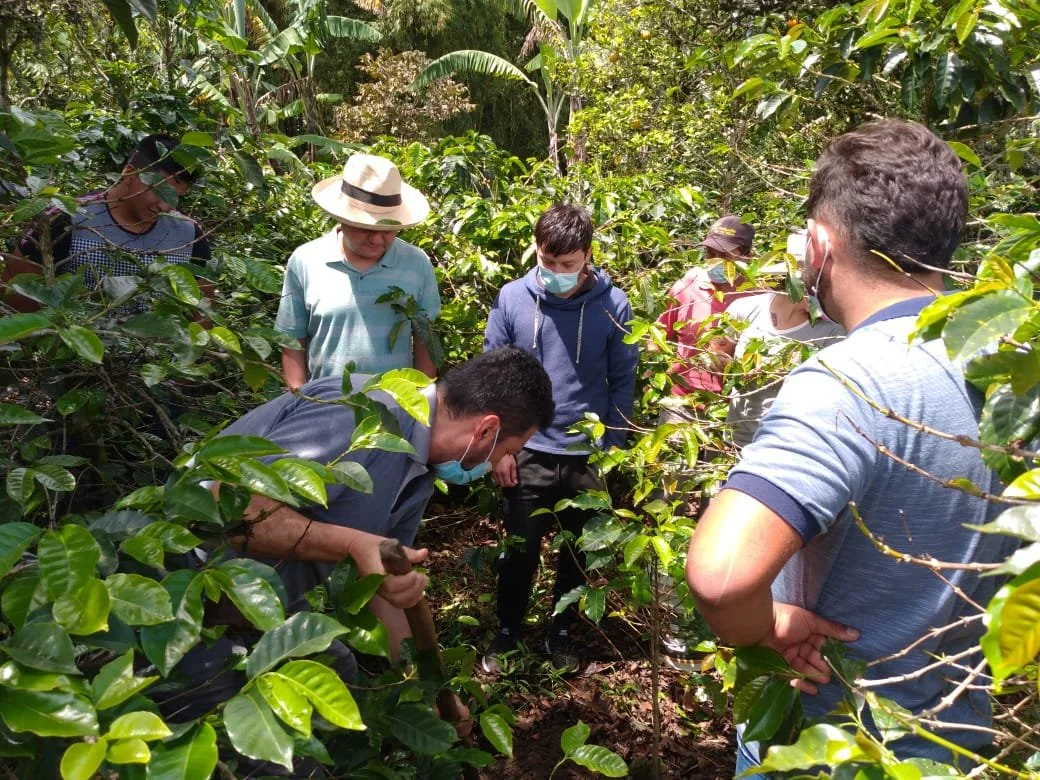
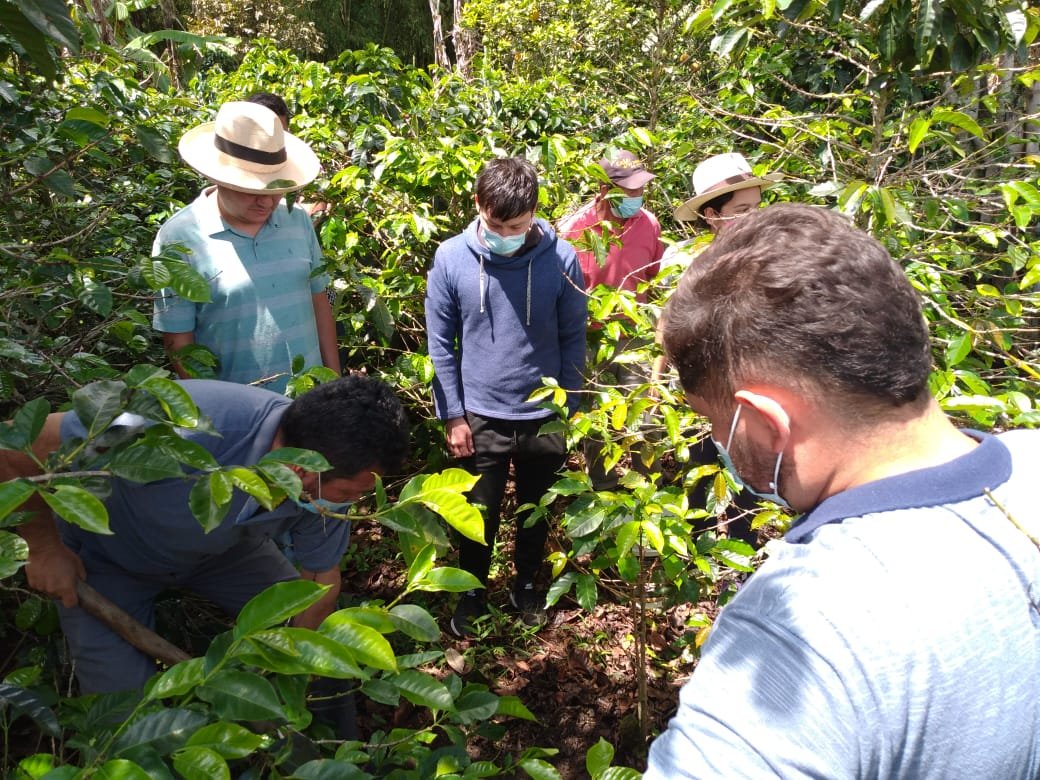
Their scientific baseline and midline evidence from the Basic Income project clearly shows that farmers benefited greatly from the extra money. They were able to eat well, send children to school, build foundations for their houses, buy motor vehicles, invest in labor in their farms, buy medication among other things. The control village Woal Kucan against whom the impact was measured were getting equally excited to become beneficiaries. More so, we learned that more people got excited to invest in coffee, whereas we also talked to other farmers who chose to do something else.
The other fun part is that together with Eight world, we’ve launched a platform page making it possible for roasters to contribute to the basic income part via their own unique way, and thus also making the basic income project directly connected to their microlot coffee!
Check out the platform here: https://eightworld.koalect.com/nl-NL/thissideup.
Like this, we feel we’re a step closer to a tailor-made approach to support our coffee friends
Read more here: https://thissideup.coffee/basicincomeprojectugandazombo.
These are our partner farmers in the Ndhew Microstation
Every one of our microlots 35 kg bags from Argote shows the name of the farmer.
However many lots in the Argote community taste very similar - so we grouped them into three “Lines” to help you choose the right one for yourself.
Line 1: PÚLPITO
Our Pulpito lot is an all-round typical chocolaty Colombian coffee with medium body and malic acidity.
A great “entrance” to Colombian flavours and great for espresso.
The Púlpito line is provided by these farmers.

Leonardo (2,2 hectares, 8.000 trees)
Leo is Efrain Lasso’s cousin and their neighbour. He is 67 years old. He has three daughters but none of them live in Genova anymore. He’s been farming coffee for more than 30 years. He is the first farmer to join the Argote project, and one of the few other farmers in the project who has his own washing station, but it was in very bad shape. However, he is very adamant about improving quality and always asks Juan Pablo and Efrain about how to upgrade his processing setup. With the premiums over the last years, he rebuilt his concrete washing tanks, added tiles for hygiene and built his own raised beds.
LEO
Muñoz
hectares: 2,2
trees: 8.000
Fredi
Muñoz
hectares: 0,75
trees: 3.500
Marcel
Ordoñez
hectares: 2,1
trees: 10.000
Carmela
Muñoz
hectares: 3,2
trees: 8.000
Eider
Muñoz
hectares: 0,5
trees: 1.900
Alvaro Cerón
hectares:
trees: 2000
Line 2: NARANJA
The Naranja lot is our middle-of-the-line lot: it exhibits recognisable Nariño flavours, chocolate,
some dried fruits and citric acidity. Crisp and clean medium-bodied espresso or thick filter.
The Naranja line is provided by these farmers.
Jesús
CeRóN
hectares: 2,2
trees: 10.000
MaRIA
ArGOTE
hectares: 2
trees: 5.000
ASENcIO
Muñoz
hectares: 1,1
trees: 5.000
GeRARDO
Muñoz
hectares: 1,5
trees: 6.000
benedo lópez
hectares:
trees: 3000
Jesús Alberto Cerón
hectares: trees: 400
Line 3: MORADO
Morado is our high end lot. Juicy, clean and good complexity and vibrant acidity.
This is a coffee that deserves to be roasted lighter as it “unpacks” ever more layers as it cools.
The Morado line is provided by these farmers..
sandro
CERÓN
bernardo
Cerón
trees: 600
Yuli Urbano
These are the single farmer lots.
Some farmers’ coffees do not fit neatly into the three lines, usually because of different processing like natural or anaerobic experimentation,
but sometimes just because of excellence in processing.

Adiela (3 hectares, 10.000 trees)
Adiela is 83 years old and Juan Pablo’s aunt. She has been a widow for over 30 years and has three daughters, two of them are school teachers in Génova. The other one works in Bogota. She’s a very hardworking woman, she is always around the house and farm and lives to take care of her coffee trees, platanes, chickens and daily cows. All the milk and eggs that the Lasso Argote household consumes come from her. Her grandson comes to help her during the harvest and has become interested to take over her coffee farm in due time, Juan Pablo is working to include him into the project as well.
ADIELA
ARGOTE
hectares: 3
trees: 10.000
Ibeth
Muñoz
hectares: 1
trees: 3.500

Jhon (3 hectares, 700 trees)
Jhon is one of the youngest farmers in the Argote ensemble. He has been actively working in Argote since 2018. He spends most of his time helping his family grow coffee, and preparing the organic fertilizers. He himself is also shifting to fully organic in the little piece of land he owns and where he recently started planting his own coffee. Last year he attended a regenerative course gifted by Antoine from Kaffa Roastery in France along with Juan Pablo’s sister in Cali. This course was given by the famous regenerative Jairo Restrepo Rivera of “La Mierda de Vaca”. He is eager to understand the demands of the Specialty market and is interested to innovate on different coffee processing methods.
JHON
Muñoz
hectares: 3
trees: 700

Jhoan (0.25 hectares, 500 trees)
Jhoan lives with his mother and he is 21 years old. He has a very small coffee plot (500 trees only) and has two other jobs: he works as a roaster in the local school and is a mechanic for the local television tower. His coffee is of exceptional quality as his knowledge of specialty processing is very high, he constantly educates himself. He is the only one in the Argote project who does all the processing completely by himself. He is one of the people who we believe will become an important part of the future of the Argote project in terms of cupping and quality control. His coffee grows at 2,050 meters above sea level.
JHOAN
CERÓN
hectares: 0,25
trees: 500

Mauricio (1.2 hectares, 6000 trees)
Mauricio is also part of the Argote family, grew up amongst coffee, and as a young producer is now working on land that also grows around 6,000 other species of trees! Father of two, he is the first member of the Bolaño family to become a member of the Argote Project. We definitely hope to see this amazing circle of coffee growers continue its expansion in years to come!
MAURICIO BOLAÑOS
hectares: 1,2
trees: 6.000


Our Colombia value chain is quite unique. It is not often that you see a smallholder coffee farm controlling and owning all origin activities of the value chain. Our investment in a hulling machine and Juan Pablo's entrepreneurial spirit are the main reasons for this structure.
TRACEABILITY
You can find all the signed contracts and shipping documents that we made with Argote since 2021 below (Google Drive).

2015: Used our premium to finance 50% of a new hulling machine to allow direct export, first-ever export of Argote family's coffee, obtained independent exporter license.
2016: built covered and raised drying beds, from TSU premium installed fermentation tanks, hosted first-ever Field Barista Project, created first honey and natural tests, exported the first cascara, helped Muñoz Diaz family process and export their micro lot.
2017: created individual farmer lots and rewarded the best ones with a $1 p/kg premium; initiated first organic fertilizer trials; created three experimental fermentation lots (30, 42, and 66 hours) in cooperation with Jelle van Rossum. Juan Pablo travelled to Holland to meet his clients for the first time.
2018: 3 more farmers trained and added to the producer base. Nursery created and SL28 planted. First direct export to a roaster. Names of all producers printed on the bags. Cascara quality control protocols developed.
2019: Anaerobic processes from previous season tested, roasting equipment bought at the farm, fermentation times structurally adapted, first large natural lots created, around 40% of the harvest sold directly to and in cooperation with roasters. Rebuilt part of the drying setup in a drawer form, inspired by a local monastery that also processes coffee.
2020: Construction started on a regenerative training center in the center of Génova for farmers to learn about composting, intercropping, mulching, microbial fertilisers, as means towards becoming independent of industrial inputs..
2021: Death of Efrain, Juan Pablo’s father and esteemed leader in the village. Juan Pablo, Juan Pablo’s sister and Jésus stepped in his footsteps and help create continuity after the passing of such a trusted figure in the Argote project.
2022: Regenerative Training center in full use, Juan Pablo followed fermentation courses to create even quirkier experiments tailor-made to high end specialty roasters’ needs. First Field Barista Project since 2019 and largest ever.
2023: Regenerative premium used to invite the world famous Colombian regenerative guru and founder of "La Mierda de Vaca” to Génova for a course on composting and creating fertilisers using yeasts, bacteria and other home-made cultures.
CULTIVARS
Castillo, Caturra, some Catuaí
in nursery: SL28
Elevation
1,950 - 2,800 meters
NOTABLE
Very first specialty coffee to come out of Colón Genova in Nariño. Production, harvest, wet- and dry-milling are all done by the Argote family. Produced without pesticides, the Argote family inspects all coffee trees visually for signs of leaf rust. Transition to regenerative agroforestry on its way. Actively creating a village of specialty coffee producers.
PROCESSINg
Fully washed: hand-picked, de-pulped, washed with mountain water, fermented for 18-24 hours, sun-dried on concrete patios and on raised “drawers” with high airflow for about 2 weeks, manually sorted at the farm in four separate rounds, hulled and bagged at the Argote family farm.
Natural: Once the coffee is picked it is put it on the patio to dry in thin layers, it is turned regularly. It is covered at night or when it's raining. If the weather is good it will be ready in 4-6 weeks, otherwise it could take more than 8 weeks, drastically reducing the space available for other coffees.
Cupping notes
2025 LANDED SAMPLES
-
-
Argote - Jhoan Esteban Cerón - alcoholic
Argote - Ibeth Muñoz - alcoholic
Argote- Juan Pablo Lasso - double fermentation
Argote - Juan Pablo Lasso - Lactic
Argote - Juan Pablo Lasso - double fermentationArgote - Juan Pablo Lasso - alcoholic
Argote - Juan Pablo Lasso - thermal shock
-
-
Argote -Juan Pablo Lasso - thermal shock - pink bourbon
Argote - Marcel Ordoñez - pink Bourbon double fermentation
Argote - Ibeth Muñoz - pink Bourbon
Argote - Marcel Ordoñez - pink bourbon washed
Argote - Mauricio Bolaños - pink Bourbon
-
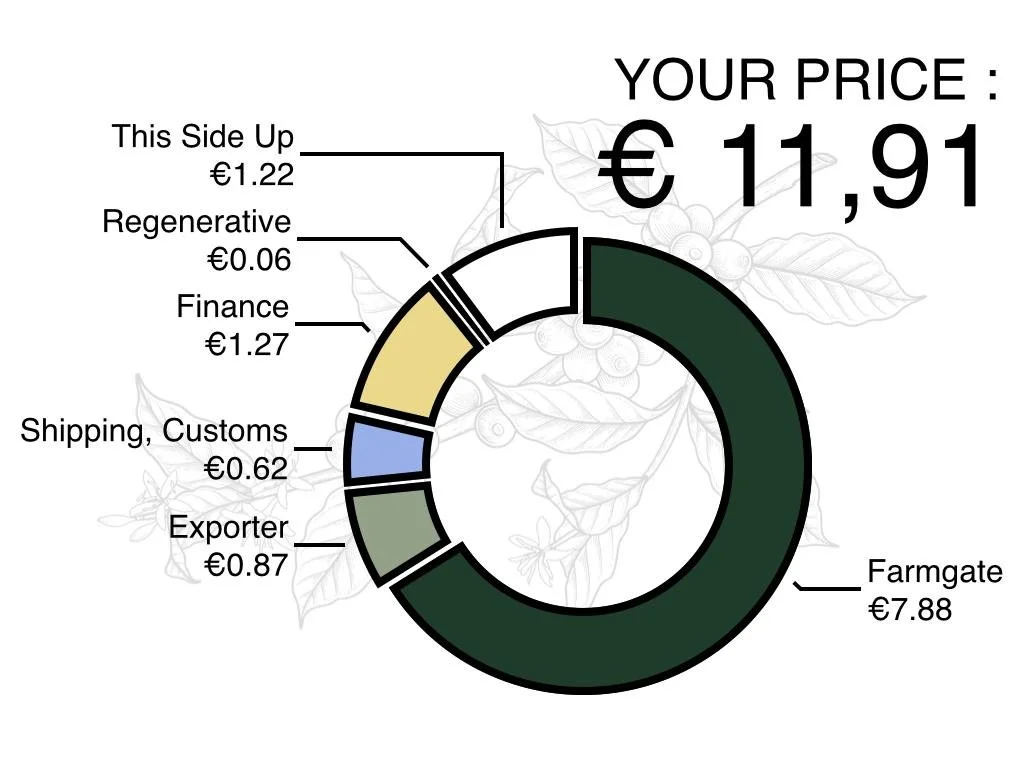
The price you pay for Argote Washed Model 1 p/kg. We agreed on this price directly with the farmers, disregarding the volatile US Coffee C price.
-
Juan Pablo and rest of the farmers in the Argote ensemble earn the same farm gate price per kg of parchment which changes based on the product line. We have washed, naturals and fermented lots Farmers produce one or more of these based on their skills, resources available. Juan pays the farmers for their parchment.
-
Argote buys parchment from their farmers and incurs the cost to mill, sort the coffees to specialty grade. Other costs borne by Argote include printing and packing grain pro bags, exporter charges for sorting, shipping the coffees to the Netherlands. In 2025 the local situation deteriorated with more involvement from the cartel in the coffee business making the coffees expensive without much choice. We tried to revise the Model 1 prices but Argote still had to absorb some of the costs even in the new scenario for the washed coffees.
-
International shipping from port of Buenaventura, Colombia to Rotterdam, Netherlands. It is inclusive of customs, insurance and warehousing costs and sea freight.
-
Average financing cost owed to (mostly social) lenders. This ensures immediate payment to the farmers when the coffee leaves the farm or port. This includes storage, taxes and finding financing for the coffee.
-
A standard TSU premium on all coffees designated exclusively to accelerate farmers’ own regenerative agriculture projects. They have so far set up a field Barista project and an agroforestry hub.
-
This Side Up compensation for spending time and resources importing this coffee. Our work includes year-round contact with producers, managing export, shipping, import, warehousing, grading, sampling, finding and keeping roasting partners for Argote. € 1,22 is This Side Up’s Model 1 markup. For a full overview of our modular margin construction, see the Trade Models page.
Our QC’s Flavour impressions
Srong commitment from both sides has made this harvest a big step up from last years: Colombia has become one of the most broad flavour offers we have available at the moment. And to let you navigate easier through its diversity we introduced “lines” based on flavour profile. From grounded and basic Pulpito with notes of melon and black tea, to more playful Naranja with red apples and chocolate sweetness and as the most complex berry and stone fruit-like cups - Morado line. However Colombian offer goes further to single farmer washed lots, naturals and alcoholic fermentation profiles. This rainbow of flavours starts from balanced fruity cups with malic acidity, expands through natural processing to tropical smoothie and finds its culmination in alcoholic profiles that makes the cup truly funky.
Small tip from my end: if you are searching for more specific varieties (like pink bourbon) or processing (koji maybe?) - shoot us a message. These lots nearly never make it to our stock offer, but are available with a commitment from your side!
Renata Hardewijn, June 2024

Maria Argote Washed 2023-2024
Roasting Advice
No big surprises here. Our ‘Washed Colombia’ profile consistently brings the most out of our washed lots. If you are setting your own profile - watch out for your air flow at the end of the roast, as too strong settings tend to add overpowering hibiscus tea-like acidity. For both the natural and alcoholic profile we use ‘Natural Colombia’, it gets the most character of the cup while smoothing “rough” corners of processing. The washed profile for alcoholic works just as well, so we encourage you to try both. For these two processing methods shorter development time might be the key.

Juan Pablo Lasso Argote
Juan Pablo Lasso Argote is our close friend. He was responsible for making his family's direct export possible and is active on social media. Next to his native Spanish, he is fluent in English and speaks some French.
Email: jupalasso@hotmail.com
Phone: +57 3002199249


Colón Génova - Nariño, Colombia
PHOTO GALLERY
You may use these images freely to promote Argote among your customers.